Vietnam live hog prices fluctuate slightly; some areas may see gains on November 27
On November 26, live hog prices in Vietnam ranged from VND 50,000 to VND 56,000 per kg. Prices rose in Phú Thọ and Đồng Nai but fell in Quảng Trị. Experts expect prices in some areas may rise slightly on November 27. A commune in Nghệ An also ordered tighter controls on the disposal of diseased pigs to prevent the spread of infection.

On the morning of November 26, live hog prices in Vietnam were generally stable, with prices nationwide ranging from VND 50,000 to VND 56,000 per kg. The price in Phú Thọ rose by VND 1,000 per kg to VND 53,000 per kg; in Quảng Trị, it fell by VND 1,000 per kg to VND 50,000 per kg. The price in Đồng Nai edged up to VND 56,000 per kg, the highest in the country.
In the northern region, live hog purchase prices stood at two levels: VND 51,000 and VND 53,000 per kg. Tuyên Quang was at VND 51,000 per kg, while the other 14 provinces and cities were all at VND 53,000 per kg. Prices in the central and Central Highlands regions ranged from VND 50,000 to VND 55,000 per kg, with both Đắk Lắk and Lâm Đồng at VND 55,000 per kg.
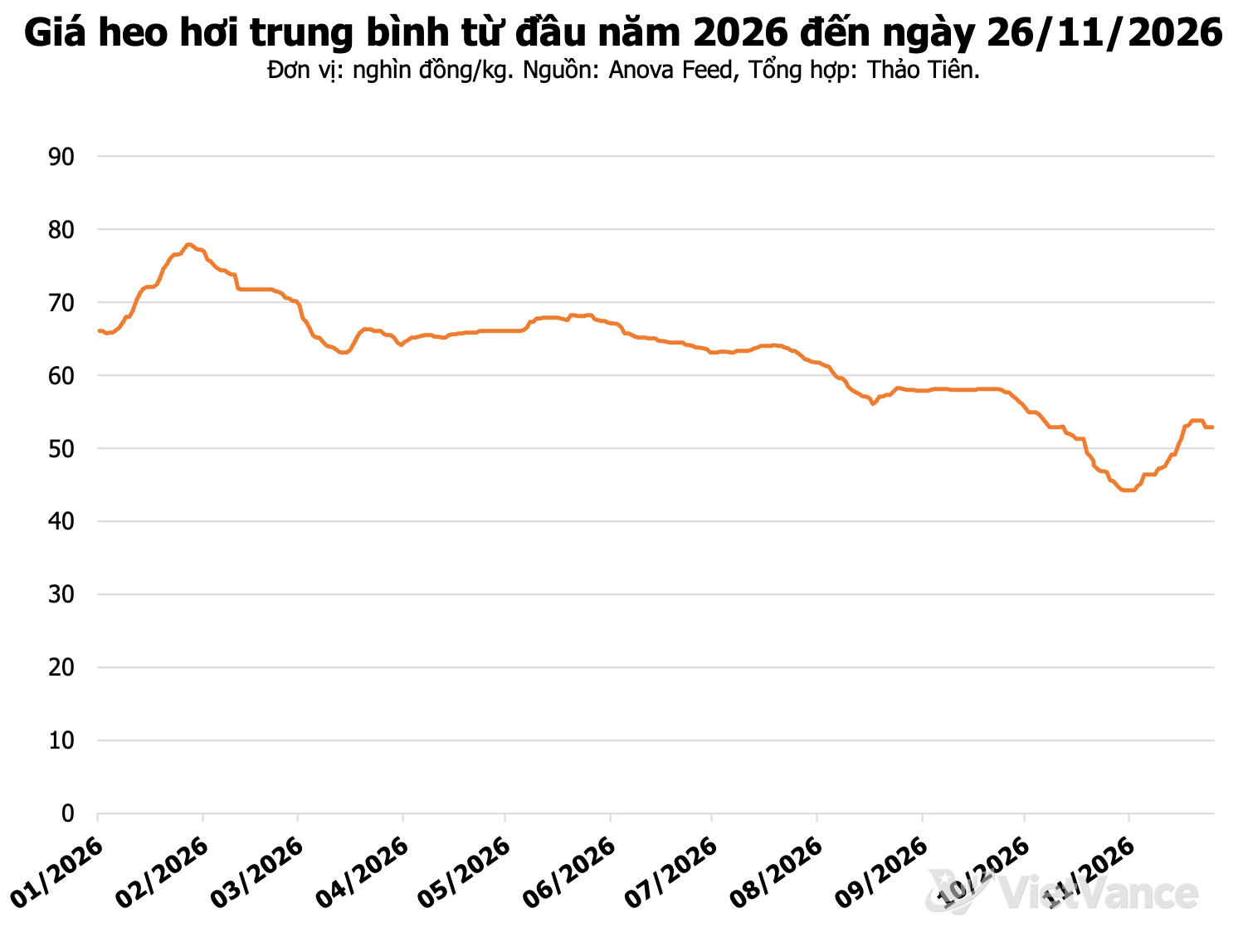
On November 26, live hog prices across Vietnam ranged from VND 50,000 to VND 56,000 per kg.(VietVance)
In the southern region, prices ranged from VND 51,000 to VND 56,000 per kg. Tây Ninh, Đồng Tháp and Ho Chi Minh City were all at VND 55,000 per kg, while Cần Thơ had the region’s lowest price at VND 51,000 per kg. Experts expect live hog prices in some areas may rise slightly on November 27, as upward momentum continues to prevail in the market.
Regarding disease control in pig farming, the People’s Committee of Hoa Quân Commune in Nghệ An Province issued a document on November 20 calling for proper disposal of pigs infected with African swine fever. Local inspections found that some farmers had taken diseased pigs to the former brick kiln area for burial without following technical procedures. The commune authorities instructed the relevant villages to manage burial sites and inspect burial pits, and required farmers to obtain guidance and agree on a disposal plan before burying pigs. Improper disposal will be subject to inspection and administrative penalties under the law.
Source: VietVance