Vietnam's National Assembly passes 38 laws and 18 resolutions on land, tax and infrastructure
After a 27-day session, Vietnam's National Assembly passed 38 laws and 18 resolutions covering land pricing, housing, corporate tax, labor protections, tourism and the digital economy. It also approved investment in three expressways and set economic and social development targets for 2027.

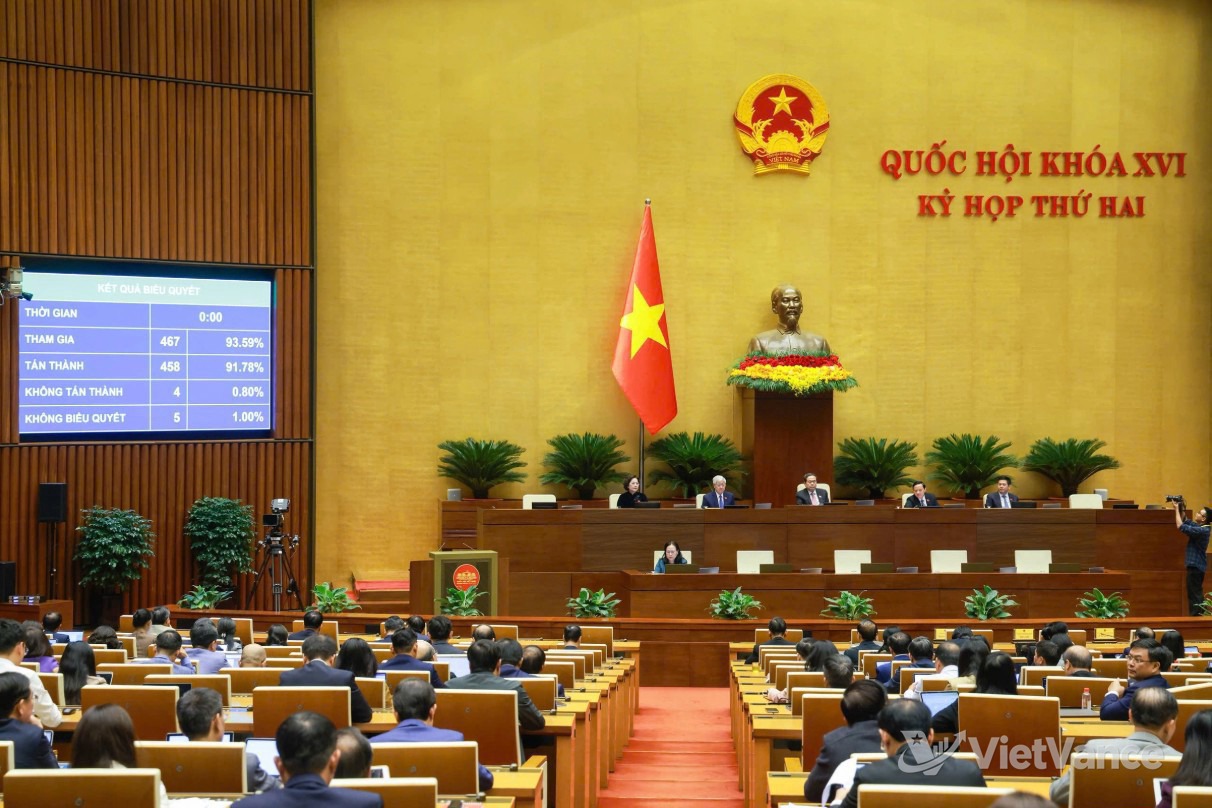
Vietnam's National Assembly passed 38 laws and 18 resolutions during a 27-day session, covering land, housing, taxation, investment, social security and infrastructure. It also approved the 2027 economic and social development plan, setting targets of at least 10% GDP growth, GDP per capita of about US$6,100 and a consumer price index increase of about 4.5%.
The revised Land Law requires land price tables to be drawn up every three years and improves mechanisms for compensation and resettlement when land is acquired. Revisions to the Housing Law focus on developing social and rental housing, while revisions to the Law on Real Estate Business address contract transfers, financing and developers' responsibilities. Deposits for auctions of residential land for individuals range from 20% to 50% of the starting price; for land used in investment projects, they range from 10% to 20%.
Tax policies approved by the National Assembly exempt eligible small and medium-sized enterprises from corporate income tax for three years from the date they first receive a business registration certificate. The revised Bidding Law simplifies contractor selection procedures and expands autonomy in procurement. Special tourism policies will apply from January 1, 2027, through the end of 2036, covering investment incentives, business support, and measures to facilitate visas and entry.
On infrastructure, the National Assembly approved investment plans for three expressway projects totaling about 430.5 kilometers, with preliminary investment of VND 162.393 trillion. The revised Electricity Law focuses on removing obstacles to the development of power generation and grids. The National Assembly also called for at least 15% of 2027 state budget spending on science to go toward strategic technology research and for the National Venture Capital Fund to be finalized and put into operation in 2027.
New digital regulations address identity verification in transactions involving banking, securities and e-commerce, as well as the management of cross-border data transfers. On labor policy, Vietnam will add two paid public holidays from March 1, 2027, bringing the annual total to 13 days. An adjustment to the administrative boundary between Hanoi and Phu Tho will also take effect on January 1, 2027, placing about 40.06 square kilometers under Hanoi's administration.
Source: VietVance