Vietnam’s Finance Ministry Forms Railway Funding Policy Task Force
Vietnam’s Ministry of Finance formed a 30-member task force in mid-November 2026 to study policies for funding high-speed and urban railways and submit a proposal to the prime minister. The North–South high-speed railway has a preliminary investment estimate of $68.4 billion, while urban rail projects in Hanoi and Ho Chi Minh City also face funding pressures.

Vietnamese Minister of Finance Ngo Van Tuan signed a decision in mid-November 2026 to establish a task force to study mechanisms for mobilizing resources for high-speed and urban railways. The 30-member group is chaired by Deputy Minister of Finance Ta Anh Tuan, with Le Thanh Quan, director of the Department of Investment and Infrastructure, serving as its permanent deputy chair. Its members come from various ministries, local departments and businesses.
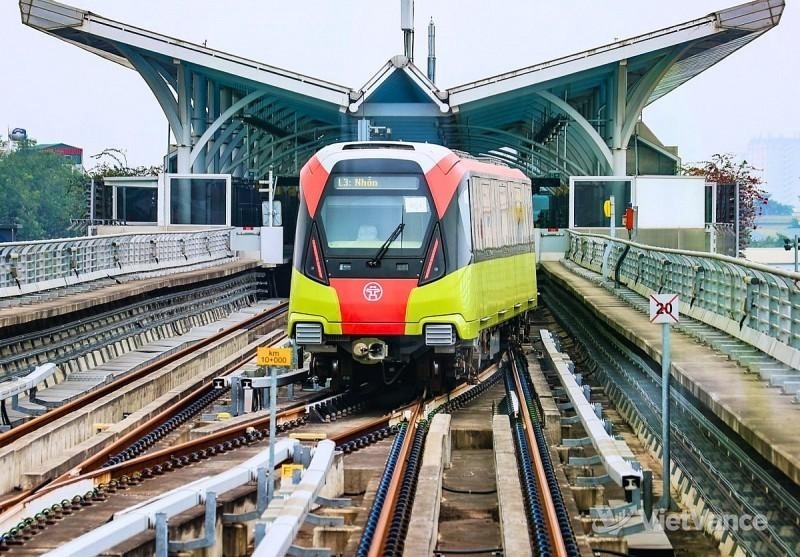
Vietnam’s Ministry of Finance has formed a task force to study mechanisms for mobilizing resources to build high-speed and urban railways.(VietVance)
The task force will develop a proposal on policies for mobilizing resources for railway construction and submit it to the prime minister for consideration and approval. Members will work on a part-time basis, and the group will dissolve after completing the proposal.
The study comes amid enormous railway investment needs, limited state budget resources and growing difficulty in obtaining official development assistance. Vietnam’s National Assembly has approved the North–South high-speed railway project, with a preliminary total investment of $68.4 billion. Urban rail networks in Hanoi and Ho Chi Minh City still face difficulties with financing and implementation progress.
Under the Capital Master Plan, which has a 100-year vision, Hanoi plans to build 18 urban railway lines totaling about 979 kilometers. It aims to complete about 500 kilometers by 2035 and the entire network between 2035 and 2045. Ho Chi Minh City is advancing three lines and preparing to begin construction on another five, aiming for a 255-kilometer network by 2030.
Railway projects have long payback periods, relatively low financial returns and high risks, making existing mechanisms insufficiently attractive to private capital. Efforts to generate revenue from increases in land value, transit-oriented urban development and railway infrastructure assets have also fallen short of expectations. Beyond construction funding, railway development requires resources to support domestic industry, acquire and master technology, train personnel and build supply chains.
Source: VietVance