
Vietnam Clarifies Three Tax Exemption Conditions for Transfers of a Sole Home or Residential Land
Vietnam’s tax authority issued a document on November 6 outlining personal income tax exemptions for property transfers, inheritances and gifts. To qualify for an exemption when transferring their sole home or residential land in Vietnam, individuals must meet three conditions: own only one such property, have held the right for at least 183 days, and transfer it in full.

Vietnam’s tax authority (Cục Thuế) issued Document No. 8472/CT-QLNT on November 6, 2026, explaining personal income tax exemptions involving property transfers, inheritances and gifts. It also clarified the conditions for transferring a sole home or residential land in Vietnam. The rules are based on Articles 18 and 19 of Decree No. 253/2026/NĐ-CP.
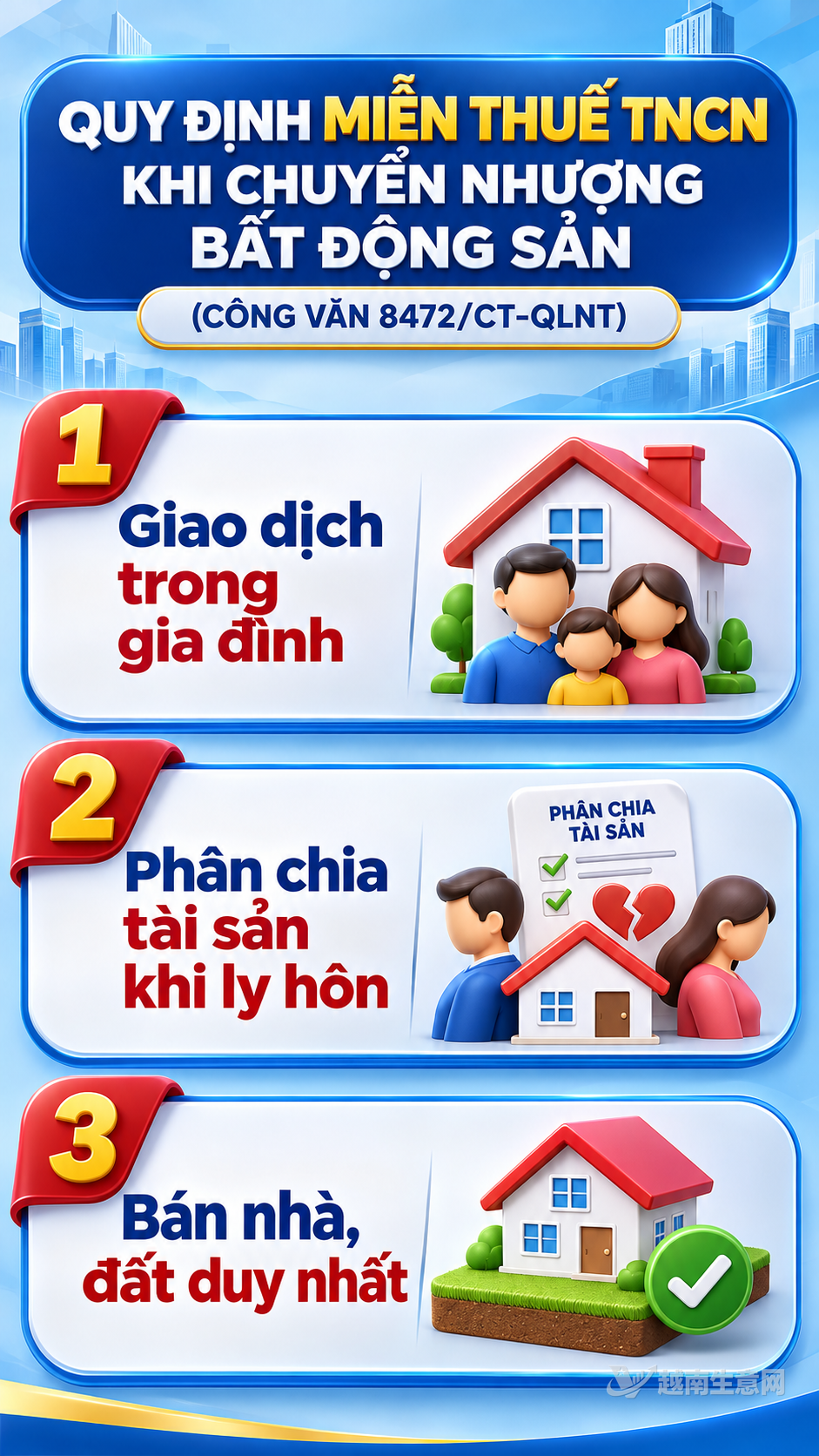
Illustration of personal income tax exemptions for property transactions.(VietVance)
The document lists exempt property transactions between spouses, parents and children, grandparents and grandchildren, and siblings. Transactions between adoptive parents and adopted children, and between parents-in-law and their sons- or daughters-in-law, are also covered, including cases in which a spouse has died. The exemption for transactions between family members may also apply to homes and buildings to be constructed in the future that comply with real estate business law. Income arising from the division of homes or other property upon divorce, under a spousal agreement or court ruling, is also exempt from personal income tax.
Individuals transferring their sole home, residential land use rights and assets attached to that land in Vietnam may apply for an exemption under the rules. Transfers of homes or buildings to be constructed in the future do not qualify under this provision. The tax authority said transferors must meet all three conditions: at the time of the transaction, they hold ownership rights to only one home or use rights to only one residential land parcel; they have held those rights for at least 183 days by the time of transfer; and they transfer the entire home or all the residential land use rights.
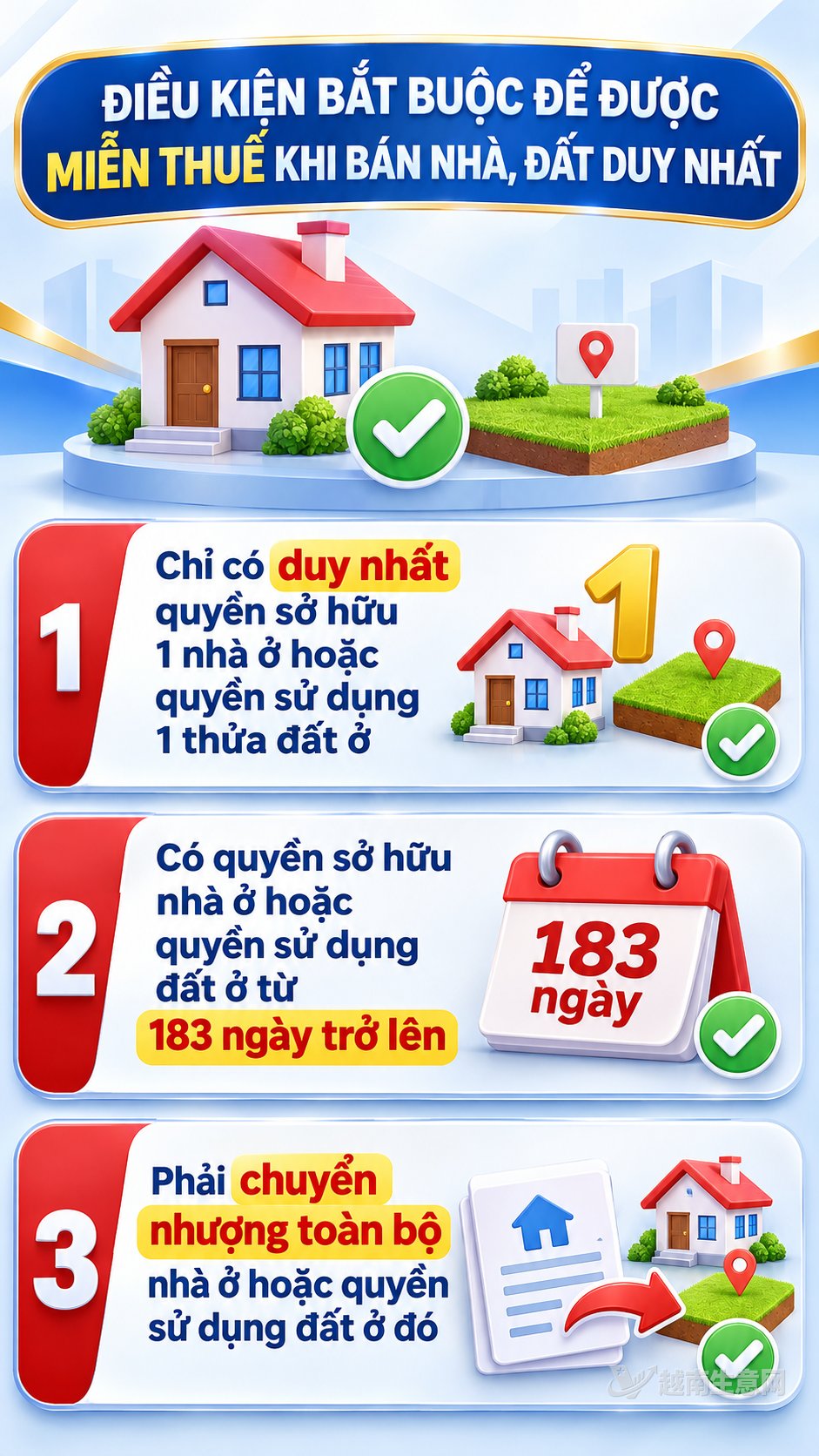
Illustration of the tax exemption conditions for transferring a sole home or residential land.(VietVance)
If a transferor also owns a home or building to be constructed in the future at the time of the transaction, the tax authority will not recognize the property being transferred as their sole home or land parcel. Transferring only part of the rights to a sole home or residential land does not qualify for this exemption, even when those rights are jointly held.
Source: VietVance