Dragon Capital Executive Outlines Three Factors for Stock Allocation
Dragon Capital Việt Nam CEO Lê Anh Tuấn said at a November 20 event that stock allocations should reflect personal risk tolerance, corporate earnings and monetary conditions, and market trading conditions. Investors should not adjust their portfolios based solely on economic growth forecasts or a single day’s trading.

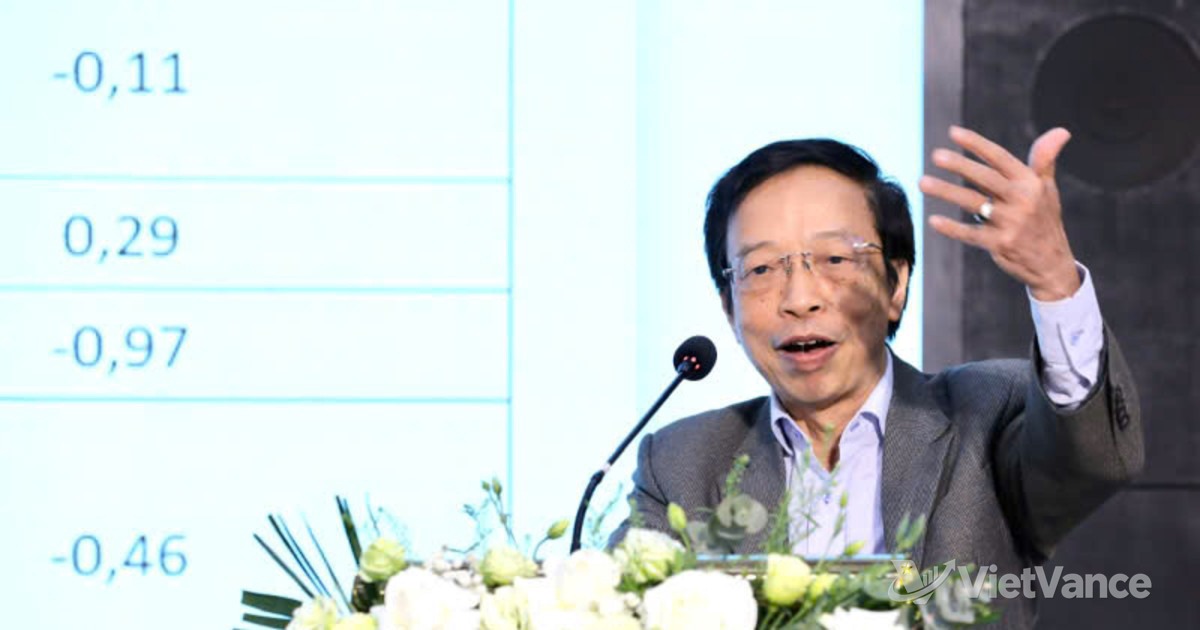
On the afternoon of November 20, Lê Anh Tuấn, CEO of Dragon Capital Việt Nam (DCVFM), presented an asset allocation approach at an investment event. He said investors should first determine how much loss they can tolerate and when they will need their money, then consider market cycles and trading conditions to decide the proportions of stocks, bonds and cash. Vietnam’s stock market rose in 2021, when gross domestic product grew by about 2%, but fell in 2022, when it grew by about 8%. Economic growth figures alone are therefore insufficient to judge the stock market’s direction.
He offered a reference allocation of 50% stocks, 35% bonds and 15% cash, stressing that the proportions must suit an individual’s risk tolerance. People with an investment horizon of about 20 years could raise their stock allocation to 70%–75%. Those who will need their money sooner must consider stock price fluctuations and the risk of being forced to sell at low prices. He cautioned that bonds can also fall in value during market turmoil.
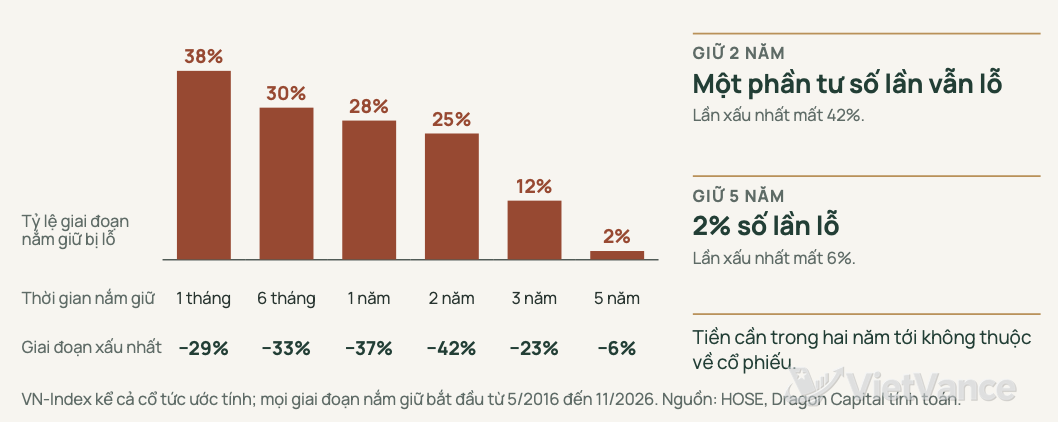
Illustration showing how investment horizons and tolerable losses inform asset allocation.(VietVance)
On market cycles, he recommended monitoring earnings expectations and monetary conditions together. As of November 20, among roughly 150 stocks he tracked, only 29 had their earnings forecasts raised, while more had their forecasts lowered. He therefore saw a weaker earnings outlook for the fourth quarter of 2026 and the first quarter of 2027. Average interest rates had fallen by about 0.4% over the previous 12 months, but he said that was not enough to confirm a clear easing of monetary conditions.
Trading conditions can help determine when to adjust portfolio allocations. He proposed monitoring whether the VN-Index is above or below its 200-day moving average, the proportion of stocks above their 50-day moving average, and volatility over 20 trading days. In the week of November 20, the market remained below its 200-day moving average, but volatility had narrowed from the previous week, so his model shifted its assessment of market conditions from unfavorable to neutral. He recommended increasing stock allocations gradually when both the market cycle and trading conditions give positive signals.
An investment simulation he presented covering 2017 to the present showed that a portfolio invested entirely in stocks tracking the VN-Index would have generated an average annual return of about 10.82%, but would have suffered a drawdown of about 43% in 2022. Adding a market cycle assessment produced a simulated average annual return of nearly 11% and a maximum drawdown of about 17%. These figures are model simulation results. He expects that combining personal goals, market cycles and trading conditions can help control portfolio drawdowns.
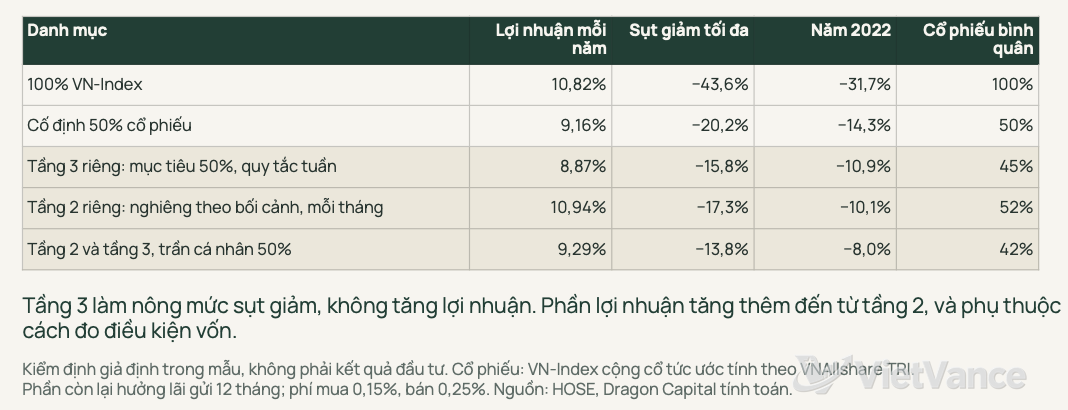
Lê Anh Tuấn presents the results of an investment simulation using the asset allocation model.(VietVance)
Source: VietVance