Australian Company Tests Silicon Chip Quantum Computer at Commercial Data Center
Australian startup Diraq is testing a silicon chip quantum computer at a commercial data center in Sydney. Its current system has eight qubits and uses less than 20 kilowatts of power. The company plans to scale up the system for complex computing tasks, but its energy savings and commercial viability remain unproven.

Australian startup Diraq is testing a silicon chip quantum computer at a commercial data center in Sydney. The current system integrates eight qubits on a single silicon chip, and the entire setup uses less than 20 kilowatts of power. Diraq founder Andrew Dzurak believes quantum computing could eventually handle some complex computing tasks and ease pressure on data centers’ electricity supplies.
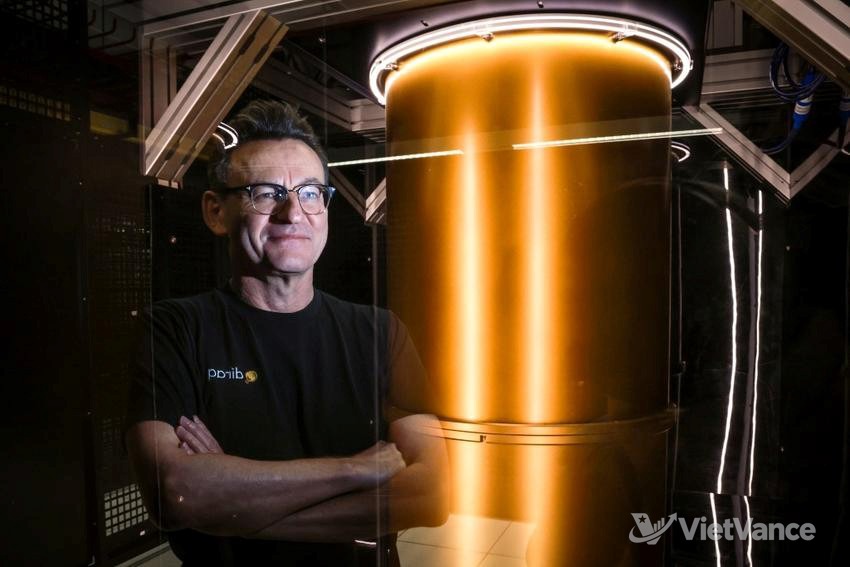
Diraq founder Andrew Dzurak beside a cooling system for quantum chips at a data center in Sydney.(VietVance)
The development of artificial intelligence models is increasing data centers’ demand for computing power and electricity. Quantum computing could tackle certain problems that conventional computers struggle to solve efficiently, but the equipment must keep its qubits stable, while cooling, error correction and operating costs remain barriers to commercialization. Hybrid computing is closer to practical use at this stage: conventional computers handle most work, while quantum processors take on specific problems suited to them.
Diraq plans to expand its system to 150,000 qubits by 2029 and hopes to integrate 2 million qubits on a single silicon chip by 2031. Andrew Dzurak expects the system to use several hundred kilowatts of power at that point. These figures for scale and power consumption are company targets or estimates; large-scale computing capability, continuous operation and total costs still require independent testing.
Beyond data centers, Diraq sees potential for quantum computing in molecular simulations for drug and battery material research. The company estimates that, if annual system operating costs remain below US$100 million, quantum computing could raise the success rate of new drug development by 10% and reduce the cost of bringing a new drug to market by about one-third. These outcomes still depend on whether the technology and cost targets can be achieved.
Australia is also investing in the commercialization of quantum technology. Another company, PsiQuantum, has received A$1 billion in Australian government investment to develop a different type of quantum computer in Queensland; construction began in June 2026. Funding, manufacturing capacity and market demand remain issues to resolve before local research can find commercial applications.
Source: VietVance