Vietnam–South Korea AI and Semiconductor Conference Signs Eight Cooperation Agreements
The first Vietnam–South Korea AI and Semiconductor Conference was held in Hanoi on November 12, 2026. Businesses, associations and educational institutions from the two countries exchanged eight cooperation documents covering semiconductor supply chains, technology development and workforce training. Participants also discussed joint research, product commercialization and the requirements for Vietnamese firms to enter global supply chains.

The first Vietnam–South Korea AI and Semiconductor Conference (VKAISS 2026) was held in Hanoi on November 12, 2026. Businesses, associations and educational institutions from the two countries exchanged eight memoranda of understanding and agreements covering business and semiconductor supply chain connections, technology development and workforce training. The conference also arranged nearly 100 direct business meetings between companies from the two countries.
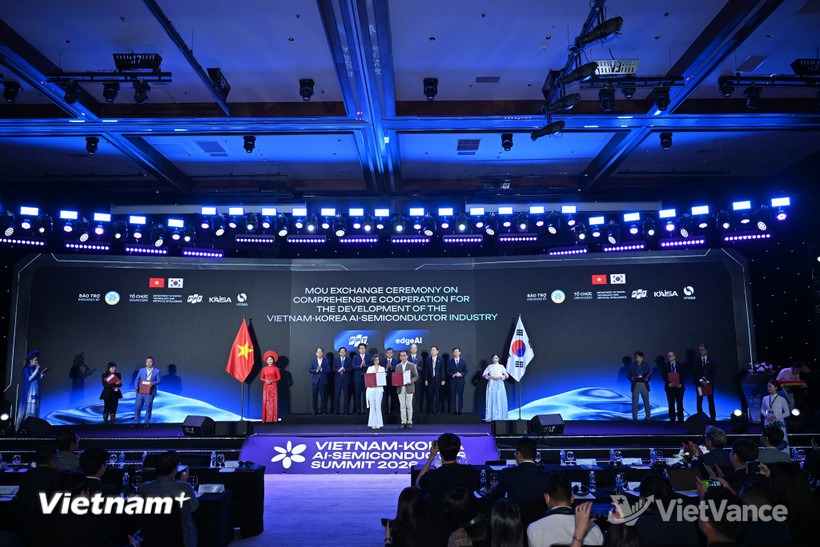
The first Vietnam–South Korea AI and Semiconductor Conference.(VietVance)
At the conference, Vietnam’s deputy minister of science and technology outlined three areas of cooperation with South Korea: extending cooperation beyond investment and production to joint research, chip design and product development; developing highly skilled workers over the long term; and jointly building an open, secure and trustworthy AI and semiconductor ecosystem. He also urged the parties to develop specific projects and implementation timelines for the agreements already signed.
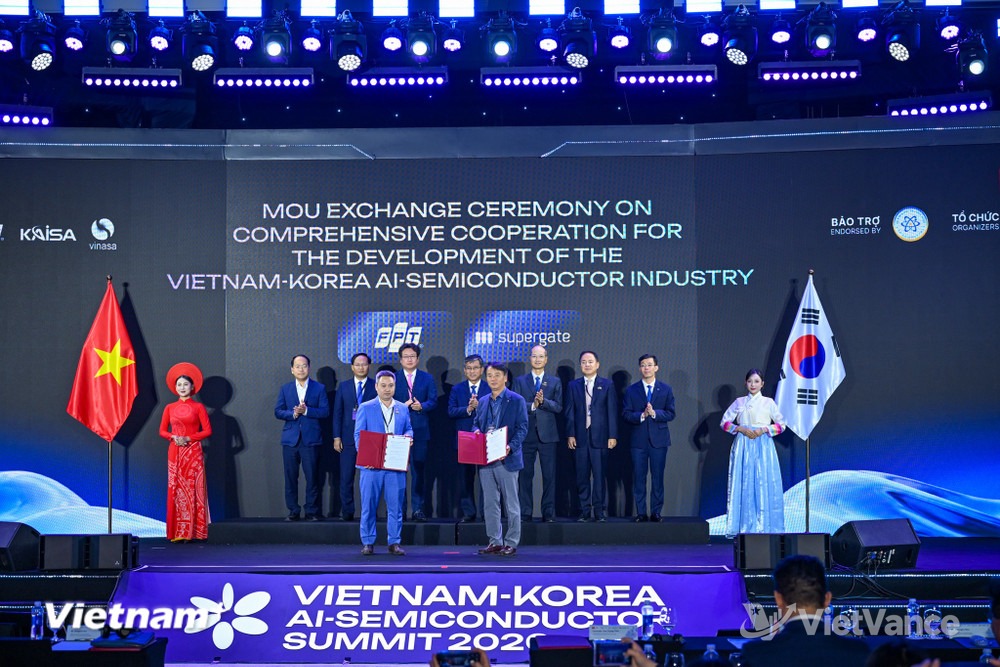
Vietnamese and South Korean businesses, associations and educational institutions exchanged eight memoranda of understanding and agreements at the conference.(VietVance)
The conference discussed the capabilities and standards Vietnamese companies need to participate in the global semiconductor supply chain, as well as the conditions for moving from chip design to commercial products. FPT Group said it is gradually developing chip research and design capabilities, conducting trial operations at a semiconductor packaging and testing plant in Bắc Ninh, and running workforce training programs.
Under Vietnam’s Decisions No. 1018/QĐ-TTg and No. 1017/QĐ-TTg, the country aims to have at least 100 chip design companies, one small-scale chip fabrication plant and 10 packaging and testing plants by 2030. It also aims for annual semiconductor industry revenue exceeding US$25 billion and to train 50,000 semiconductor workers with university degrees or higher. These figures are policy targets, not the current size of the industry.
Source: VietVance