China’s computing capacity exceeds 3.1 million PFlops
At the 2026 World Computing Conference, which opened in Hunan province on November 20, China’s National Data Administration said the country’s computing capacity had exceeded 3.1 million PFlops. Participants said the market share of domestically produced AI accelerator cards continued to rise in 2025 and projected that intelligent computing capacity could reach 10,000 EFlops by 2030.

At the 2026 World Computing Conference, which opened on November 20 in China’s Hunan province, Liu Liehong, head of China’s National Data Administration, said the country’s computing capacity had exceeded 3.1 million PFlops, ranking second worldwide. By the end of June 2026, the number of tokens processed daily had exceeded 500 trillion. A token is a basic unit of data used by artificial intelligence models to process information.
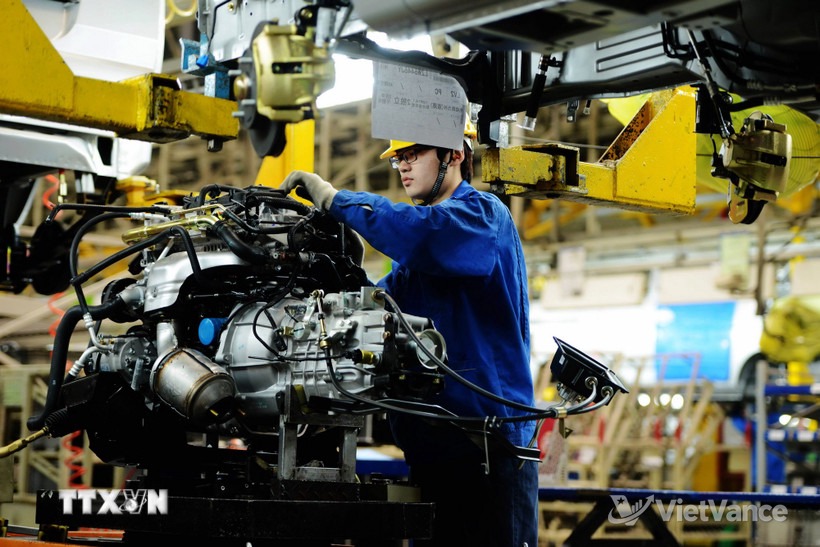
File photo of industrial production in China.(VietVance)
Liu Liehong said the generation, application and circulation of tokens, along with the scale of their use, can to some extent reflect the operating efficiency of computing infrastructure, the capacity for innovation in AI models and the extent to which data resources are used. Experts at the conference said computing capacity had become an important foundation for the development of the digital economy and artificial intelligence.
Liu Wenqiang, deputy head of the China Center for Information Industry Development, said China’s computing industry was becoming more self-reliant. In 2025, the market share of domestically produced AI accelerator cards continued to rise, while the computing industry increasingly used domestically developed foundational software and AI software. He projected that China’s intelligent computing capacity could reach 10,000 EFlops by 2030, accounting for more than 90% of its total computing capacity.
Gao Dongsheng, an expert with China’s Ministry of Industry and Information Technology, said rapid advances in training large AI models and developing AI agents were raising demands for computing performance, reliability and energy efficiency. He said that, as of September 2026, China had produced more than 4 million domestic servers, while intelligent computing capacity had increased 146% year on year.
Source: VietVance