Vietnam passes electronic identification and authentication law, effective July 2027
Vietnam’s National Assembly passed the Law on Electronic Identification and Authentication on November 20. The law is generally set to take effect on July 1, 2027. Electronic transaction accounts in high-risk sectors, including banking, securities and e-commerce, must be authenticated against their holders’ electronic identities, with the government to set the implementation schedule.

At the second session of Vietnam’s 16th National Assembly, lawmakers passed the Law on Electronic Identification and Authentication on the afternoon of November 20, with 473 of the 478 delegates voting in favor. The law has seven chapters and 45 articles and is generally set to take effect on July 1, 2027. National Assembly Chairman Trần Thanh Mẫn presided over the session, and Standing Vice Chairman Đỗ Văn Chiến oversaw the vote.

Vietnamese National Assembly delegates vote to pass the Law on Electronic Identification and Authentication.(VietVance)
The law requires electronic transaction accounts in high-risk sectors, including banking, securities, telecommunications, e-commerce and social media, to be authenticated against their holders’ electronic identities. The government will set the implementation schedule in line with the progress of digital transformation. Electronic identification and authentication may be mandatory or voluntary, and data must be collected for purposes prescribed by law. Existing data must not be collected again, and documents for which electronic identification has been completed need not be presented again.
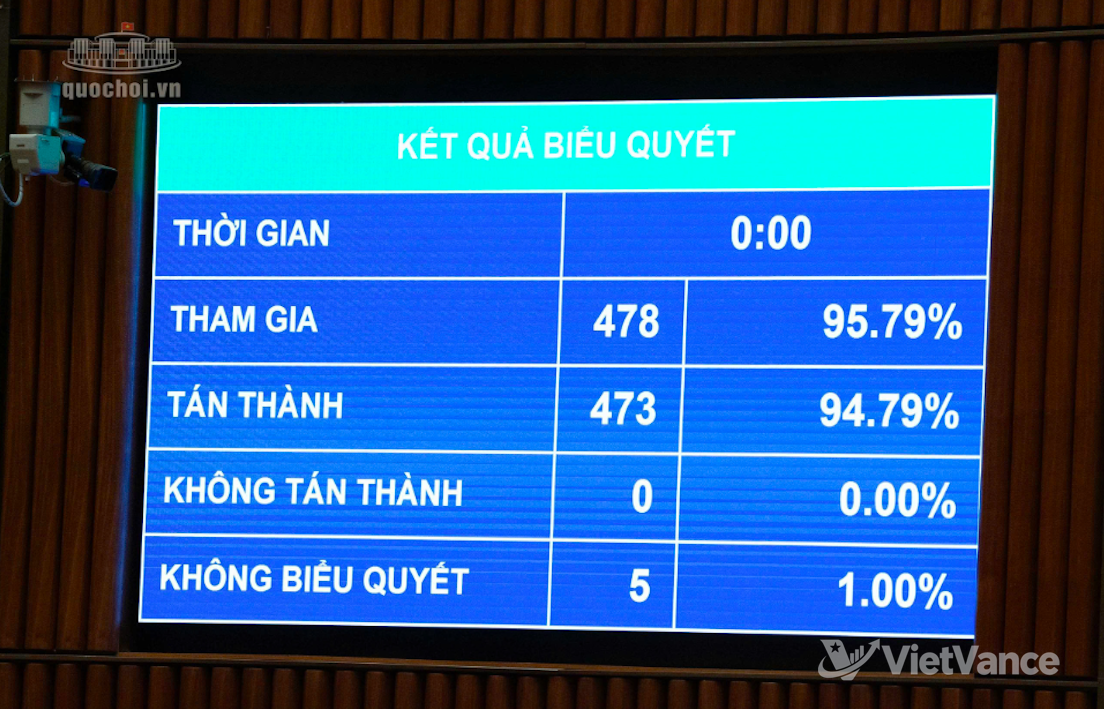
Voting results for the Law on Electronic Identification and Authentication.(VietVance)
Before the vote, Minister of Public Security Lương Tam Quang said electronic identities could be created automatically and national identification numbers issued when information in the database is complete and accurate, without requiring residents or businesses to register again. Electronic identities established before the law takes effect will remain valid, without requiring information to be collected again or identities to be recreated. Self-sovereign electronic identities must be stored in Vietnam; using information containing personal data requires the data subject’s consent.
The law also provides for managing electronic identification and authentication services through service provision requirements and post-implementation inspections, without a licensing system, and sets rules for the use of foreign electronic identities. The national electronic identification and authentication authority will begin issuing public digital signature certificates on March 1, 2027.
Source: VietVance