French Company Develops Living Artificial Skin, Plans Clinical Trials in 2030
France’s Urgo Group says it has developed living artificial skin made from human cells that can be stored frozen. It plans to begin clinical trials in 2030, with commercialization targeted from 2040. Potential uses include severe burns and hard-to-heal wounds, but its safety and effectiveness still need to be tested.

French pharmaceutical and medical device company Urgo Group announced on November 20 that it had created living artificial skin made from human cells and developed a method for long-term storage. The group plans to begin clinical trials in 2030, with commercialization targeted from 2040. The product remains in development, and its safety, quality and effectiveness have yet to be tested.
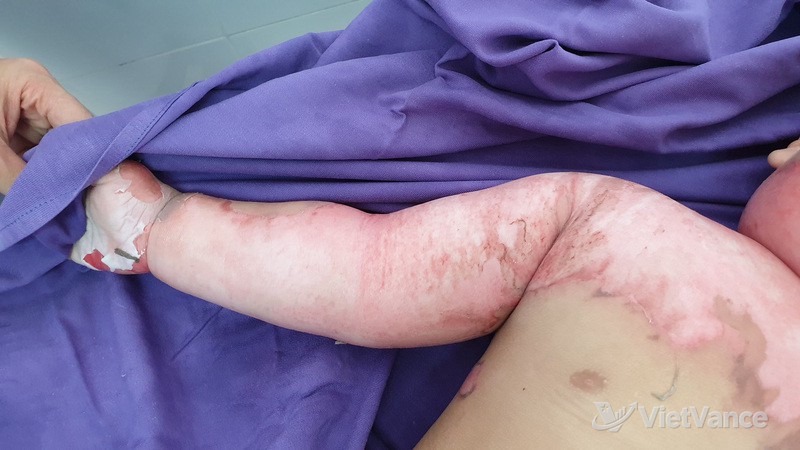
Illustrative image.(VietVance)
The achievement stems from the five-year Genesis project, which had a total budget of 100 million euros, including 22.8 million euros in support from the French public investment bank. Partners include the French National Centre for Scientific Research and Claude Bernard University Lyon 1. The artificial skin uses induced pluripotent stem cell technology to reprogram mature cells and then grow them into different types of cells to build skin tissue.
Researchers need to produce large quantities of cells, position different cell types appropriately within the tissue, and ensure the product can be accepted by patients’ bodies. Urgo Group has also established a cell bank that meets pharmaceutical standards. The group says the product can be deep-frozen at around minus 150 degrees Celsius. After thawing, the cells retain the functions needed for transplantation, allowing the skin to be produced, stored and transported in advance.
Severe burns are currently usually treated with skin grafts taken from the patient’s own body; patients with extensive burns may lack enough healthy skin for grafting. Urgo Group hopes the artificial skin will reduce reliance on patients’ own skin and be used to treat hard-to-heal chronic wounds, but these uses still require clinical validation. The group can currently produce about 100 samples in the laboratory and will focus on improving its industrial production process over the next three years.
Source: VietVance