World Economy This Week: AI Stocks Sell Off, Gold Plunges
During the week of November 15–21, the leaders of the United States, China and Russia met in Shenzhen. Anthropic’s listing failed to halt a sell-off in AI stocks, with the Nasdaq falling about 10% for the week. Gold and oil prices also declined as expectations of further Federal Reserve rate increases grew.

The leaders of the United States, China and Russia held a trilateral meeting in Shenzhen, China, on November 19. The agenda included the Russia–Ukraine war and nuclear arms control, but the meeting produced no concrete results. A meeting between the U.S. and Chinese leaders that same day was their third summit this year and also yielded no breakthrough.
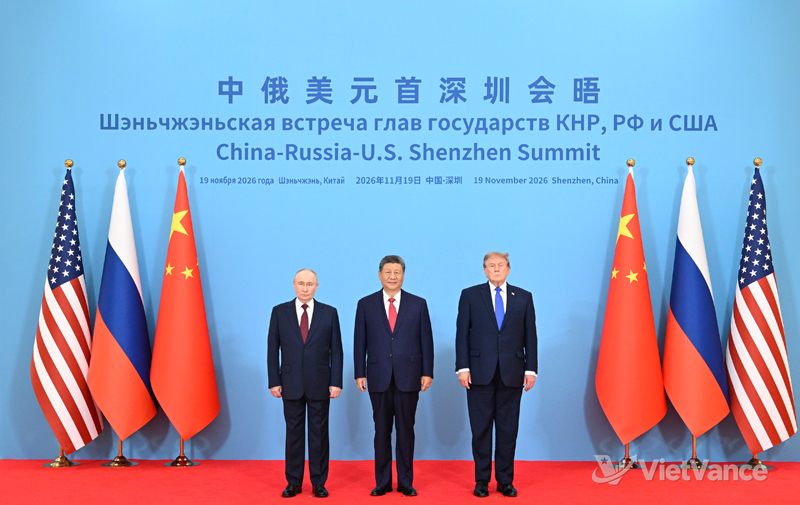
Russian President Vladimir Putin, Chinese President Xi Jinping and U.S. President Donald Trump held a trilateral meeting in Shenzhen, China, on November 19.(VietVance)
Artificial intelligence company Anthropic announced an initial public offering price of $83 per share on November 18, raising $81.3 billion. Its shares rose 17% on their Nasdaq debut on November 19, then fell 8.5% on November 20. The listing failed to reverse the sell-off in AI stocks: the Nasdaq fell about 10% for the week, the Dow Jones Industrial Average declined 8%, and the S&P 500 dropped 8.6%.
Gold prices fell about 9% for the week, their steepest weekly decline in eight months. Expectations that the Federal Reserve would continue raising interest rates and keep them high, a stronger U.S. dollar, and margin calls triggered by falling stock prices all weighed on gold. Brent crude and West Texas Intermediate prices fell nearly 4% and about 5%, respectively. Markets expect global oil supply could shift into surplus as crude shipments through the Strait of Hormuz recover.
According to data from CME’s FedWatch tool, markets are betting that the Federal Reserve will raise interest rates in December. On November 16, the U.S. Department of Commerce announced new rules requiring overseas data centers to obtain licenses when providing remote computing capacity to businesses in certain countries, while tightening export controls on advanced chips to five countries. Data released by South Korean authorities showed that the country’s goods exports have exceeded $1 trillion so far this year.
Source: VietVance