Hanoi Studies Direct Rail Links to Airports, Targeting 30–45 Minute Journeys
Vietnamese Deputy Minister of Construction Bùi Xuân Dũng has called for rail links from central Hanoi to Gia Bình and Nội Bài airports, targeting journeys of 30–45 minutes. Technical flights at Gia Bình are planned for late 2026, while commercial routes and any transfer of international flights remain undecided.

Vietnamese Deputy Minister of Construction Bùi Xuân Dũng proposed that Hanoi study urban rail lines linking the city center with Gia Bình and Nội Bài airports, aiming to keep travel times to 30–45 minutes. The proposed route to Gia Bình would pass through Gia Lâm station. Relevant agencies must also study route alignments and the locations of the central station and stations within the airports, and assess direct trains with fewer intermediate stops.
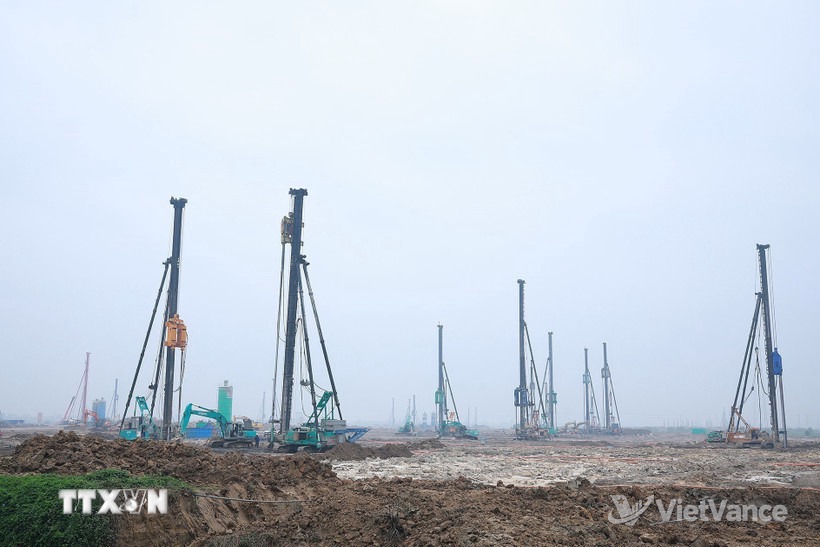
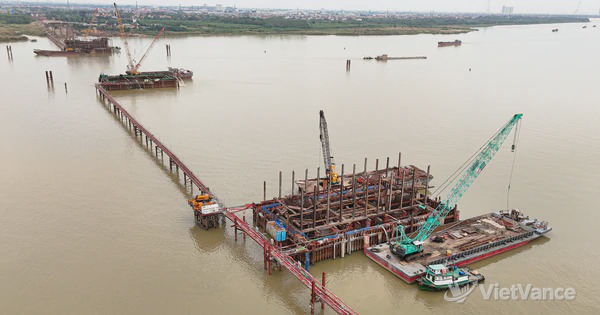
Construction site of the Gia Bình International Airport project. File photo.(VietVance)
Bùi Xuân Dũng has asked the Vietnam Railway Authority to lead work with relevant agencies to finalize rail connection plans for the two airports and ensure the lines connect with Hanoi’s urban rail network. Gia Lâm station’s role as a national railway hub linking national, local, specialized and urban railways also needs to be clarified.
The Vietnamese government is organizing a study of an operating plan for Gia Bình airport, including the possibility of transferring all international flights from Nội Bài to Gia Bình. Under the current planning direction, Nội Bài would continue handling domestic flights and some international flights in 2029–2030. Its planned annual passenger capacity is 50 million by 2030 and 100 million by 2050.
Đỗ Hồng Cẩm, deputy director of the Civil Aviation Authority of Vietnam, said a plan to prepare Gia Bình airport for operations is expected to be circulated to relevant agencies for comment in the next one to two months. Technical flights are planned for late 2026. Routes, participating airlines and arrangements to transfer flights from other airports for formal commercial operations cannot yet be determined.
Under the investment policy approved by Vietnam’s National Assembly, Gia Bình International Airport has a total investment of more than VND 196 trillion and covers approximately 1,884 hectares. Its planned annual capacity is 30 million passengers and 1.6 million tonnes of cargo by 2030, rising to 50 million passengers and 2.5 million tonnes of cargo by 2050. Construction of some major components is being accelerated with the aim of serving APEC 2027.
Source: VietVance