Ho Chi Minh City Proposes Letting Some Buildings with Construction Violations Remain Under Conditions
Ho Chi Minh City is seeking feedback on a draft special policy that would allow some buildings with construction violations to remain if they meet planning and safety requirements. Investors would still face penalties, repay unlawful gains and complete the required procedures. The draft also proposes replacing investors in delayed major infrastructure projects.

Ho Chi Minh City is seeking feedback on a draft special policy to address long-stalled projects. The draft would expand the range of buildings with construction violations that may be considered for retention and would apply to backlogged projects arising before October 1, 2026. Relevant provisions of the current Decree No. 16/2022 mainly cover violations that occurred from January 4, 2008, to before January 15, 2018.
To qualify for retention, buildings must stand on land with lawful use rights, comply with approved construction plans, and not encroach on building boundaries or protected areas for infrastructure and transport facilities. They must also meet structural, fire safety and rescue requirements, have no adverse effect on neighboring buildings, and be free of disputes. Eligible properties include completed buildings already in use and projects where construction has stopped because of penalty decisions, inspection findings, court judgments or other reasons.
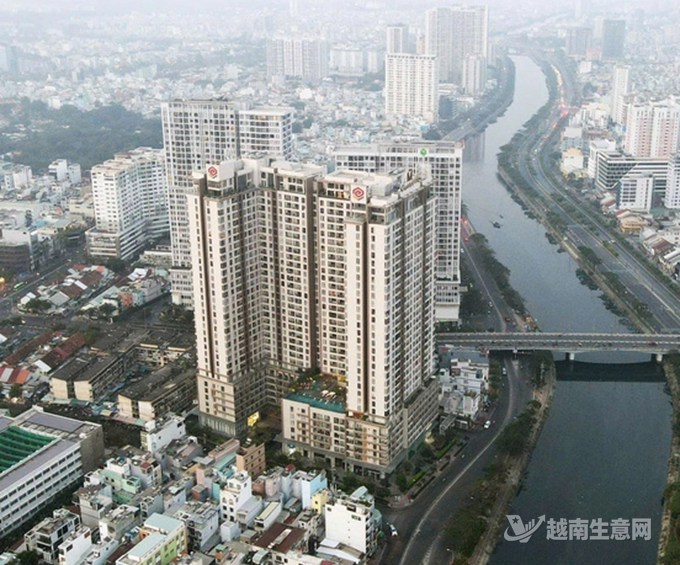
An apartment building for which obstacles to obtaining ownership certificates were previously resolved. File photo.(VietVance)
Allowing a building to remain does not exempt those responsible from liability for violations. Investors must still pay administrative fines, repay unlawful gains calculated under the draft, complete quality inspections and finish the required construction procedures. Only then may they apply for confirmation that the project meets planning and architectural requirements, issuance or adjustment of construction permits, and ownership certificates for houses or buildings in accordance with regulations. Any sections that fail to meet planning or safety requirements must still be dealt with under the law.
The draft sets the amount to be repaid at 50% of the value of the floor area built in violation of regulations. For buildings used for business, the calculation is generally based on the price per square meter in signed sale or transfer contracts; for buildings used for other purposes, it is based on construction costs in an approved budget. The relevant unit price cannot be lower than the investment cost benchmark published by the competent authority for buildings of the same type and grade. Where no contract or approved budget is available, that benchmark is used.
The draft also seeks to address delays in major infrastructure projects. If the original investor lacks the capacity to carry out a project, the city government may terminate its investment and designate a new investor. If several candidates apply, preference will go to the one promising a shorter completion period. Ho Chi Minh City’s Department of Finance said several large projects built in violation of regulations have emerged locally since 2018, and the proposed measures could help resolve longstanding disputes and reduce the waste of assets.
Source: VietVance