Vietnam Marketing Summit Discusses Product Launches and Budget Allocation in the AI Era
At a Vietnam marketing event held on November 19–20, speakers with experience in the Chinese market shared examples of using AI to identify consumer demand and adjust content distribution. Participants said companies should assess demand, marketing performance and business results before increasing their budgets.

At VSMCamp and the CSMO Summit on November 19–20, participants discussed how companies can promote new products and allocate marketing budgets as AI becomes part of consumers’ search and purchasing decisions. Yan Yi and Jiang Na shared examples of brand content distribution and smart TV platforms from the Chinese market.
Jiang Na described how a British bathroom fittings brand sought to improve its chances of being recommended in AI answers by identifying users’ search intent, building supporting information on its website and blog and in user reviews, and continually refining its content. She said the brand’s appearance rate in AI answers rose from nearly zero to more than 90%, with over 60% of appearances placing it among the top three recommendations. These figures are the results of a case study provided by the speaker.

Jiang Na, Vice President of Huan.TV.(VietVance)
Yan Yi said bbk! Communications Group used AI to analyze user discussions while promoting McCafé’s Thai milk tea frappe on Xiaohongshu. The analysis identified young people’s interest in traveling to Thailand, which the group used as a theme for content about the product experience. She said AI can bring together signals from user content, but people must still decide which needs to emphasize in product communications.
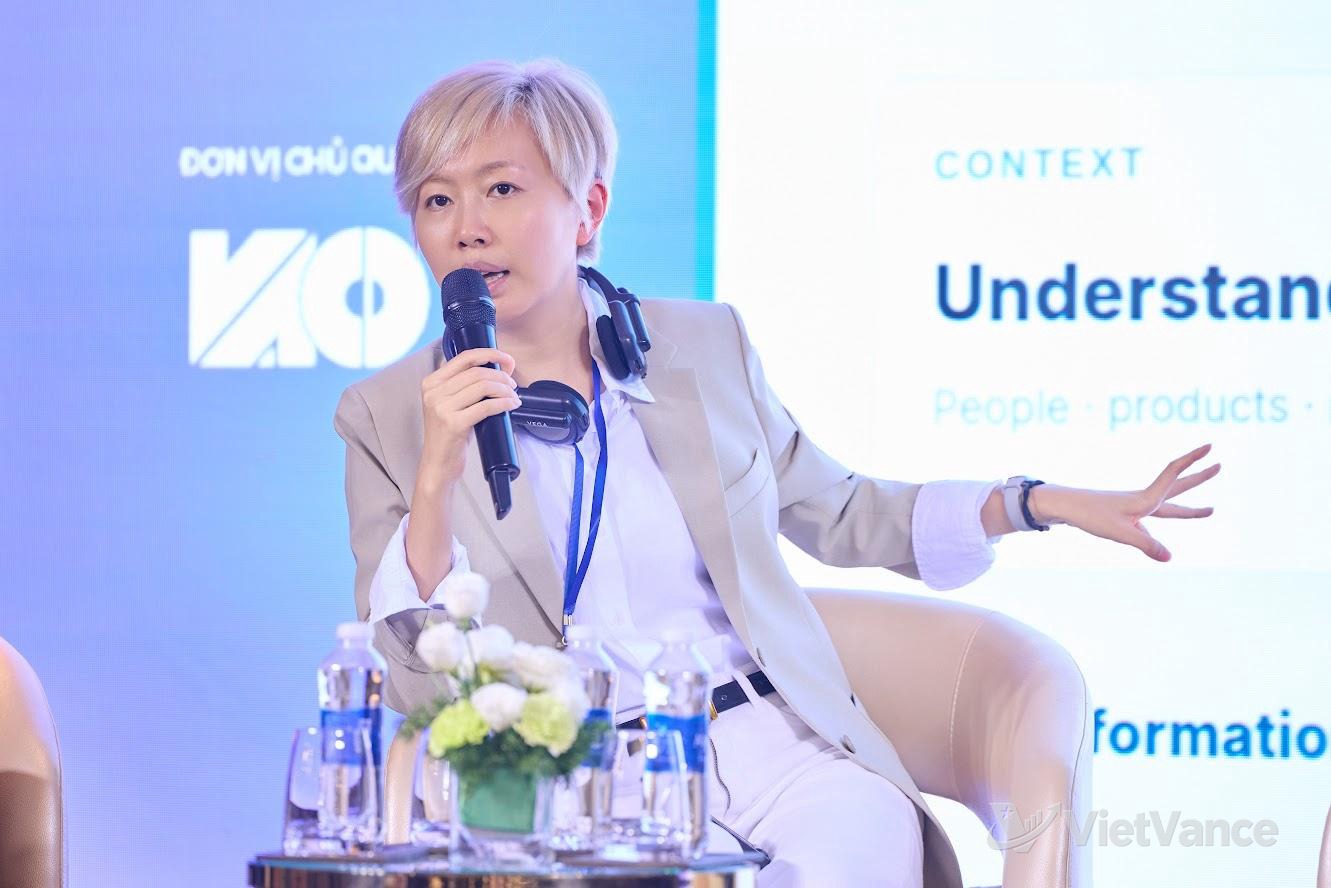
Yan Yi, founder and marketing director of bbk! Communications Group.(VietVance)
On budget allocation, Jiang Na said Huan.TV adjusted smart TV content recommendations using real-time viewing signals, after which its audience doubled, visits rose to 2.3 times their previous level and average weekly viewing time increased by 99.5%. She recommended reducing spending on channels with overlapping audiences and directing resources toward content that builds trust and captures purchase intent.
Phan Đặng Trà My, who moderated the discussion, cautioned that increases in views and engagement do not necessarily translate into sales growth. She said companies should confirm that actual demand is rising, marketing performance is stable and business indicators are improving before increasing spending. If awareness rises without sales growth, they should first examine the audience, content, frequency of exposure and purchase conversion process.
Source: VietVance