Vietnam’s Electronics Exports Grow as Domestic Supply Capacity Lags
In the first 10 months of 2026, Vietnam exported $207.02 billion in computers, electronic products, phones and related components, while imports of the same two product groups were higher. The government is seeking stronger links between foreign investors and domestic suppliers to increase local production of components and materials.

Preliminary Vietnamese customs data show that in the first 10 months of 2026, exports of computers, electronic products and components reached $149.41 billion, up 71% year on year; exports of phones and components reached $57.61 billion, up 18.4%. Combined exports of the two product groups totaled $207.02 billion, accounting for 41.5% of Vietnam’s total exports. In October, the two groups recorded a combined trade surplus of about $4.1 billion.
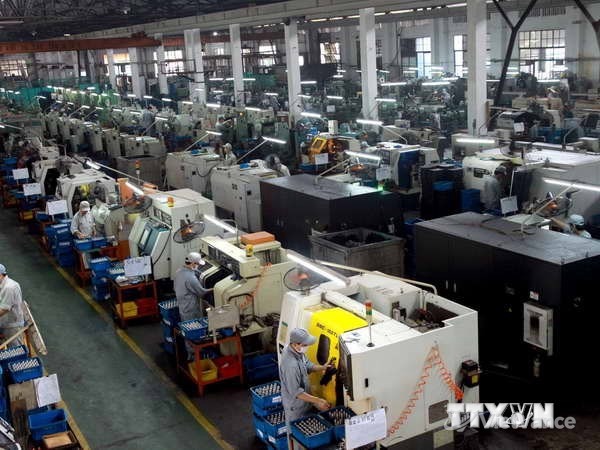
Vietnam’s position in the global electronics supply chain is drawing attention.(VietVance)
Over the same period, imports of computers, electronic products and components reached $215.25 billion, up 74.4% year on year; imports of phones and components reached $9.26 billion, down 1.6%. Combined imports of the two groups totaled $224.51 billion, exceeding their exports over the same period by $17.49 billion. Despite growing exports, the computer, electronic products and components group still requires substantial imports of production inputs.
Vietnam’s electronics exports continue to expand, but domestic companies remain limited participants in the supply of components and materials. Foreign direct investment enterprises have expanded local production capacity and brought markets and orders; bringing more Vietnamese companies into their supply chains is a key challenge in increasing domestic value added.
On September 14, 2026, the Vietnamese Government Office issued Notice No. 481/TB-VPCP, setting out Deputy Prime Minister Phạm Gia Túc’s conclusions from a related meeting. The notice prioritizes connecting foreign-invested and domestic enterprises, developing supporting industries and increasing domestic value added.
Phạm Gia Túc called on the Vietnam Electronics Business Association to establish a mechanism linking supply and demand, identify components, materials and production stages suitable for localization, and work with major electronics and semiconductor companies to identify materials and supporting products in high demand. He also called on relevant companies to draw up specific plans to localize products, components, materials and production stages.
Source: VietVance