Vietnam’s Rubber Export Volume Falls in First 10 Months as Prices Rise; India and Indonesia Markets Grow
In the first 10 months of 2026, Vietnam exported more than 1.2 million tonnes of rubber, down 16.6% year on year, while export value fell just 2.1% to nearly $2.6 billion. Higher average prices cushioned the decline in volume. China remained the largest market, while exports to India and Indonesia grew rapidly.

In the first 10 months of 2026, Vietnam exported more than 1.2 million tonnes of rubber worth nearly $2.6 billion, down 16.6% in volume and 2.1% in value year on year, respectively. A Forest Trends report compiling data from relevant agencies under Vietnam’s Ministry of Finance and Ministry of Industry and Trade showed that the average export price rose 17.3% over the same period to $2,063 per tonne, offsetting most of the impact of the decline in export volume.
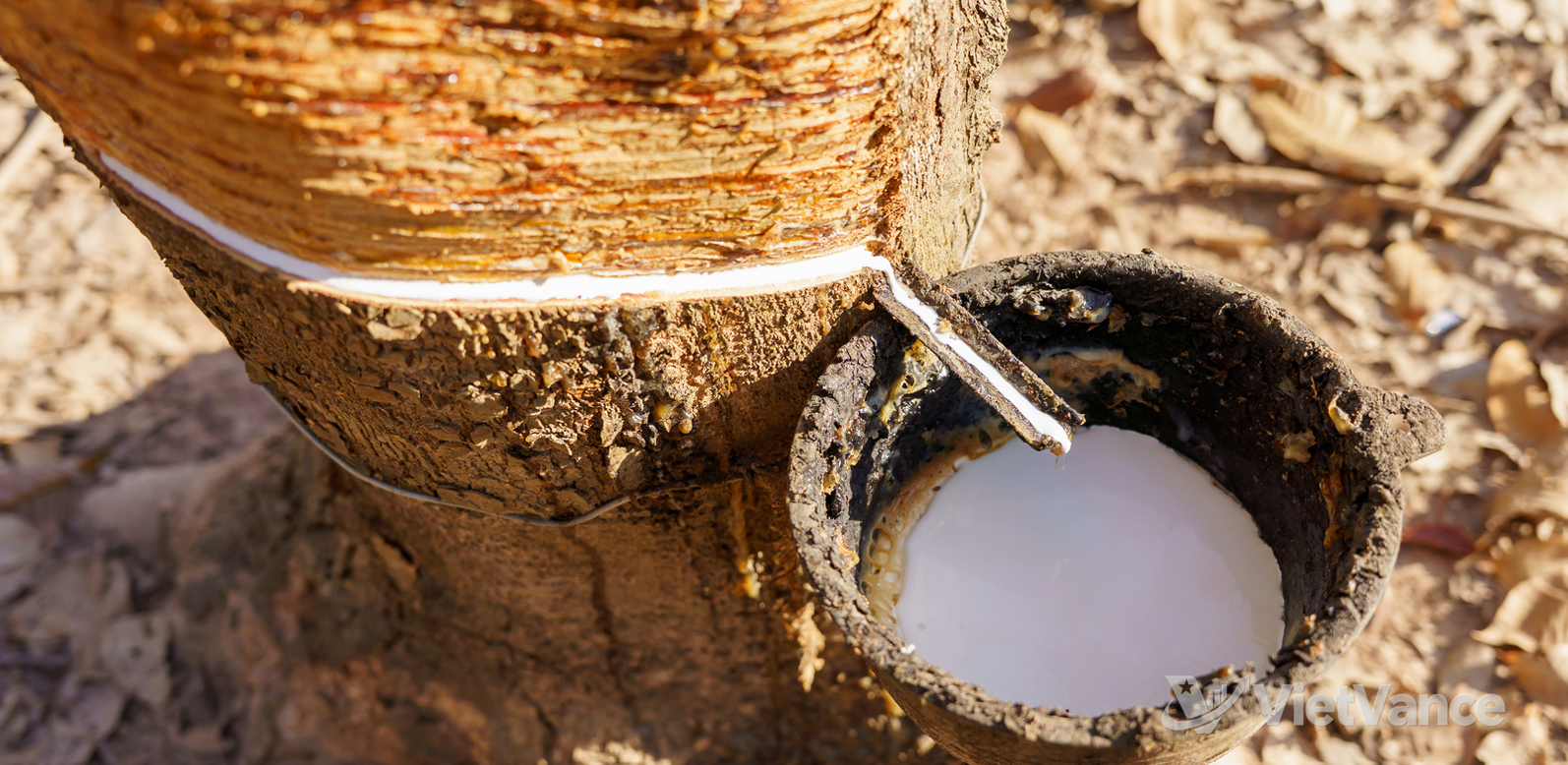
Harvesting rubber latex.(VietVance)
In October, Vietnam exported 147,000 tonnes of rubber worth $348.5 million, up 3.2% in volume and 9.7% in value from the previous month, respectively. Compared with the same month a year earlier, export volume fell 21.6%, while value rose 9.5%. The average export price for the month was $2,370 per tonne, up 6.2% month on month and 39.7% year on year.
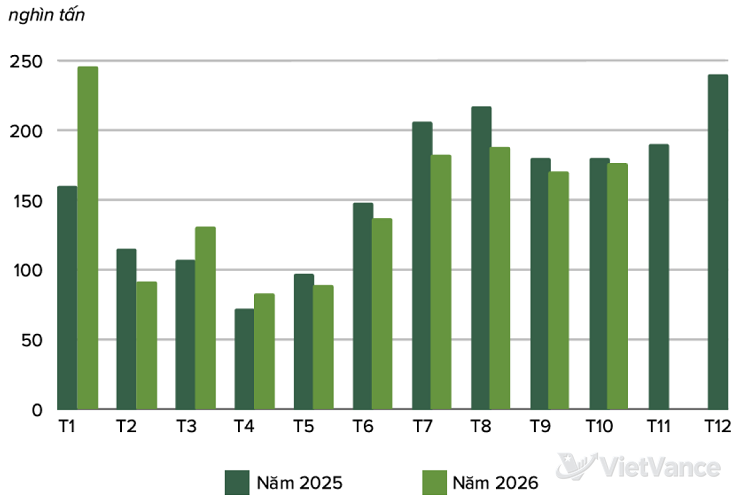
Vietnam’s monthly rubber export volume in 2025 and 2026.(VietVance)
China remained Vietnam’s largest rubber export market. In the first 10 months, exports to China totaled 715,200 tonnes worth about $1.5 billion, down 33.4% in volume and 20.6% in value year on year, respectively. China accounted for 58.3% of Vietnam’s total rubber export value. Over the same period, exports to India reached 94,200 tonnes worth $210.5 million, up 43.3% and 70.2%, respectively; exports to Indonesia reached 84,600 tonnes worth $166.5 million, up 119.3% and 146.1%, respectively. Both markets grew rapidly, but their export volumes remained far smaller than China’s.
International rubber prices moved in different directions. According to Forest Trends, some rubber futures prices in Japan and China rose between November 5 and 15, while rubber prices in Thailand fell. The report said increased supply as Thailand entered its peak harvest season, along with changes in tire production and raw material purchases, affected rubber market prices.
Source: VietVance