Ho Chi Minh City Unveils 2025–2050 Master Plan
Ho Chi Minh City has unveiled a 2025–2050 master plan for a multipolar, multicenter metropolis driven by transport links and technological innovation. The plan sets economic and population targets for 2030, while business representatives have expressed interest in infrastructure and high-tech development.

Ho Chi Minh City has unveiled its 2025–2050 master plan, proposing a large metropolitan area built around a multipolar, multicenter model, with the long-term goal of becoming a global city. The plan identifies technological innovation and transport connectivity as growth drivers. It sets targets for average annual gross regional domestic product growth of at least 10.5% through 2030, GDP of approximately US$200 billion to US$225 billion, and GDP per capita of at least US$14,500. These figures are all planning targets.
The plan provides for five growth poles, five satellite centers, five strategic connectivity systems and 10 development management zones. The central urban area will focus on finance, high-end services and the knowledge economy. The east will develop artificial intelligence, semiconductors and high technology; the west will focus on healthcare and education; the north will accommodate industry and logistics; and the south will develop ports, free trade and energy. The plan projects a population of 18 million by 2030 and 27 million by 2050.
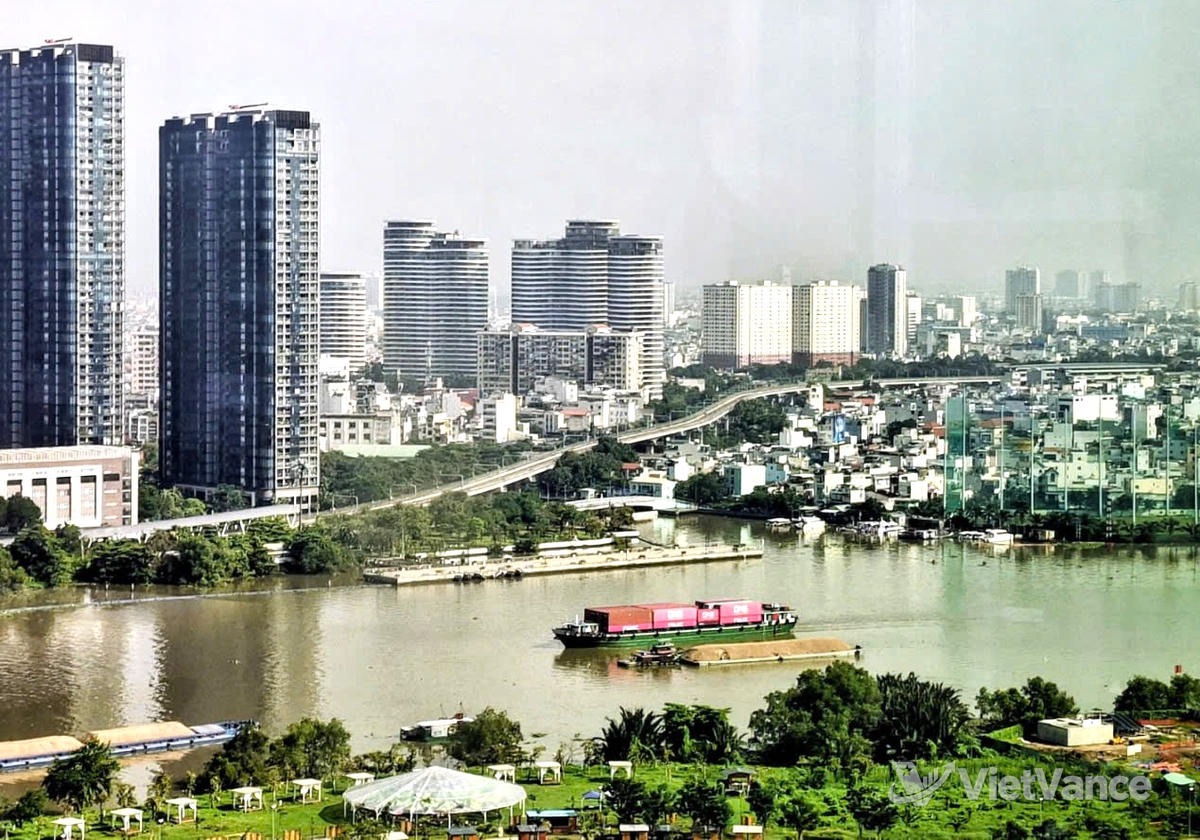
Ho Chi Minh City’s plan calls for the development of a metropolitan area with global influence.(VietVance)
On transport, the plan proposes linking the growth poles through urban rail, regional railways, roads and waterways, while prioritizing the completion of ring roads, radial routes, expressways and national highways. Sun Group’s vice chairman said the group intends to participate in projects involving urban rail, a boulevard along the Saigon River, bridges and ports, and to develop tourism services and urban areas connected to public transport. The head of government relations in Vietnam at Intel Products Viet Nam said the company hopes to strengthen Ho Chi Minh City’s position in the global semiconductor value chain and expand opportunities for Vietnamese businesses to participate in high-tech supply chains.
The head of Ho Chi Minh City’s planning and architecture department said that, after the merger, the city covers more than 6,772 square kilometers and has a population of about 13.6 million. Its expanded area also brings challenges involving regional connectivity, infrastructure, flooding and land subsidence. At the meeting announcing the plan, Vietnamese National Assembly Chairman Trần Thanh Mẫn called on Ho Chi Minh City to address infrastructure bottlenecks, prioritize investment in interregional transport, and advance digital transformation and administrative reform.
Source: VietVance