Vietnam’s National Assembly Passes Land Law Amendments, Revises Land Pricing Rules
Vietnam’s National Assembly passed amendments to the Land Law with support from more than 97% of participating delegates. The amendments revise land pricing rules, require provincial People’s Councils to set land price tables and adjustment coefficients every three years from 2028, and define unused land.

Vietnam’s National Assembly passed amendments to the Land Law, with more than 97% of participating delegates voting in favor. A major change concerns land finance and prices: provisions on specific land prices and land valuation consulting organizations have been removed, and the state will determine land prices.
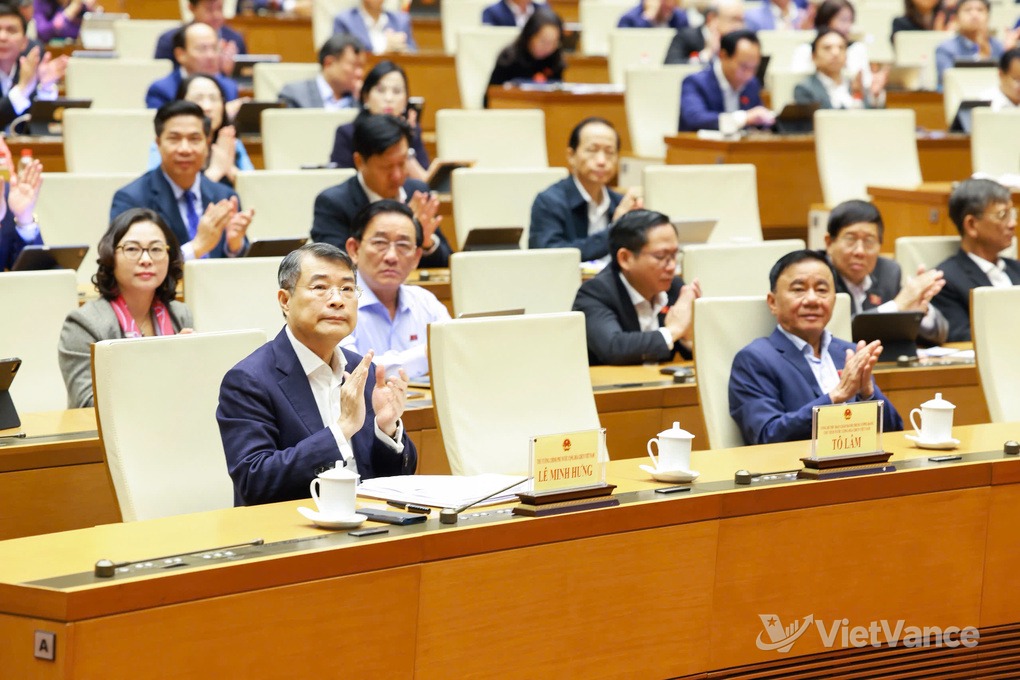
Delegates attend a session of Vietnam’s National Assembly on the morning of November 21.(VietVance)
Land valuation must follow five principles: align with development goals in each period, follow valuation procedures, rely on land data and relevant specialized data, balance the interests of the state, land users and investors, and ensure objectivity and accuracy. From January 1, 2028, provincial People’s Councils will decide land price tables and land price adjustment coefficients (K coefficients) every three years based on these principles. The tables and coefficients may be supplemented or adjusted upward or downward as required for state management or when infrastructure or planning changes. Under current rules, provincial People’s Councils decide and adjust land price tables annually for use from January 1 of the following year.
When land price tables and K coefficients are adjusted, provincial finance authorities will lead the revisions and submit them to provincial People’s Committees for appraisal. The committees will then submit them to provincial People’s Councils for a decision. Both will be used consistently to calculate land-related budget revenue, set starting prices for land auctions and determine compensation when the state recovers land. They will also be used to calculate the value of land-use rights when public service units become enterprises or enterprises wholly owned by the state are converted into joint-stock companies.
The amendments define “unused land” for the first time. This includes land allocated or leased by the state that remains unused for a specified continuous period, as well as land for investment projects that is not developed and put into use on schedule. Amendments to the Law on Non-Agricultural Land Use Tax, passed by the National Assembly on November 20, 2026, also impose a 0.2% tax on unused land from July 1, 2027.
Source: VietVance