Vietnam to Study Time-of-Use Household Electricity Pricing, Allow Private Investment in Small Nuclear Plants
Vietnam’s National Assembly passed amendments to the Electricity Law on November 21, requiring the Ministry of Industry and Trade to study time-of-use pricing for households when technical conditions permit. The amendments also call for phasing out electricity price cross-subsidies and allow private investment in nuclear plants using small modular reactors. The law takes effect on June 1, 2027.

Vietnam’s National Assembly passed amendments to the Electricity Law on November 21, 2026, with more than 99% of participating lawmakers voting in favor. The amendments require the Ministry of Industry and Trade to study a plan for applying household retail electricity prices across peak, off-peak and standard periods when technical conditions permit. The law takes effect on June 1, 2027.

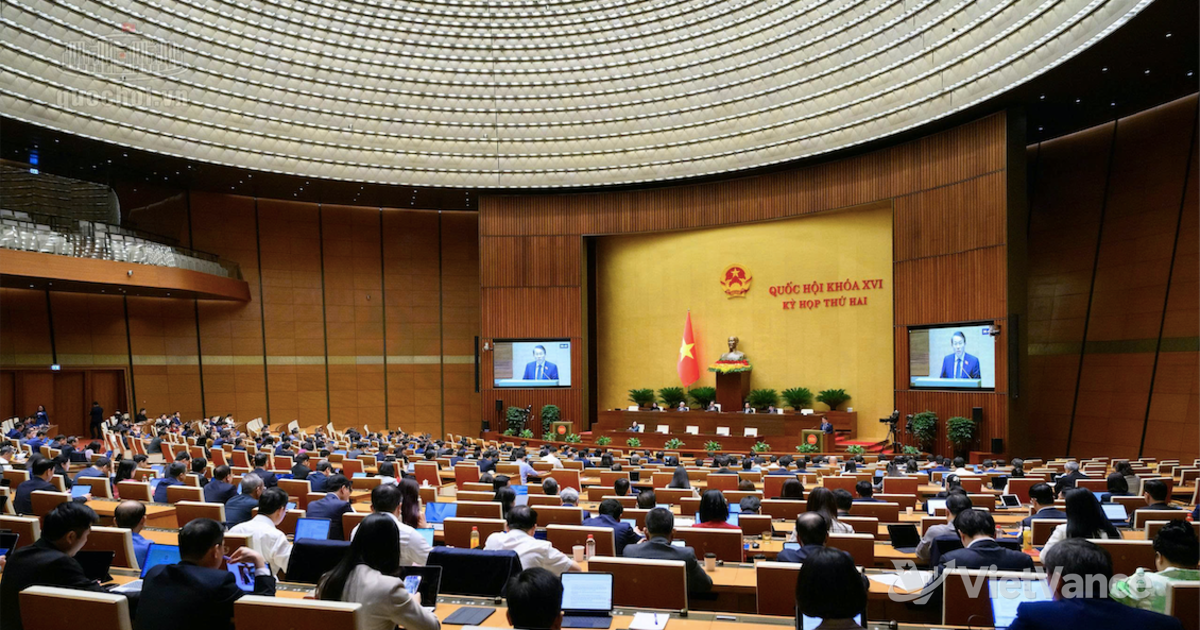
Vietnamese National Assembly delegates take part in the vote on the morning of November 21.(VietVance)
Time-of-use electricity pricing currently applies mainly to production and business customers. Households pay under a five-tier progressive tariff, with prices ranging from 1,901 to 3,844 Vietnamese dong per kilowatt-hour, excluding value-added tax. In June 2026, the Ministry of Industry and Trade said the technical conditions for applying time-of-use pricing to households were not yet in place.
Household electricity use accounts for the second-largest share of Vietnam’s national electricity consumption, after industrial use, but households have relatively limited ability to shift when they use electricity. The Ministry of Industry and Trade says studying an expansion of time-of-use pricing could encourage households to avoid peak periods and ease pressure on the power system. The amendments also call for gradually eliminating electricity price cross-subsidies and improving the retail tariff structure.
The amendments also change the rules for nuclear power investment: the state’s exclusive right to invest in the construction and operation of nuclear power plants will exclude plants using small modular reactor technology, allowing private companies to invest in such projects. Each small modular reactor unit has a capacity of no more than 300 megawatts. The government must still develop investment mechanisms in stages based on demand and the commercialization of the technology, and projects must ensure nuclear safety.
Source: VietVance