Vietnam’s Provinces Pursue Double-Digit Growth as Labor and Investment Efficiency Pose Challenges
Thirty of Vietnam’s 34 provinces and cities were assigned targets of at least 10% GRDP growth in 2026, but only 12 reached that pace in the first nine months. Slower labor force growth, unevenly distributed regional costs and benefits, and investment efficiency complicate the push to meet growth targets.

A growth plan updated by the Vietnamese government on June 27 requires 30 of the country’s 34 provinces and cities to achieve gross regional domestic product (GRDP) growth of at least 10% in 2026, up from the 28 targeted at the start of the year. In the first nine months, only 12 provinces and cities reached double-digit growth; national gross domestic product (GDP) was estimated to have grown 9.01% over the same period. According to the government’s October 5 calculations, GDP must grow by about 12.5% in the fourth quarter for full-year growth to reach 10%.
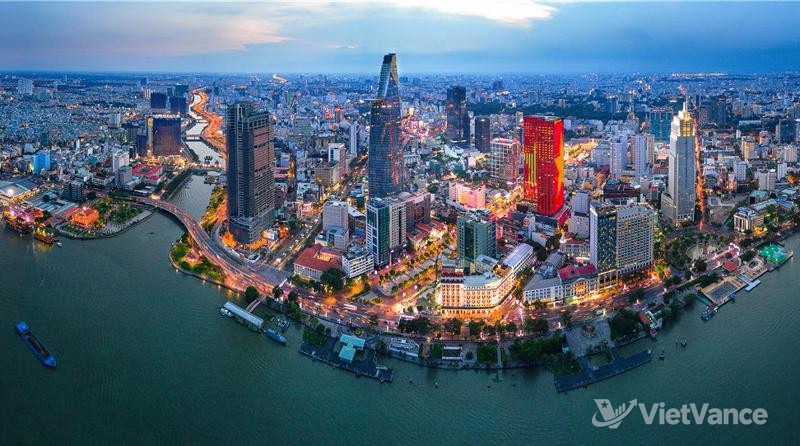
Vietnam is entering a period of high growth expectations. Illustrative photo.(VietVance)
Labor supply limits the scope for provinces and cities to expand industrial parks and attract businesses and residents at the same time. In the first nine months of 2026, Vietnam’s labor force stood at 53.8 million, up only about 697,000, or 1.3%, year on year. Labor productivity grew by an annual average of about 5.2% nationwide from 2021 to 2025, below the target of more than 6.5% for that period; the target for 2026 to 2030 is about 8.5%.
Migration also cannot increase the labor force in every locality at once. The 2024 midterm population and housing survey found that about 4 million people had migrated in the preceding five years, down from 6.7 million in 2009; about 1.6 million had moved between provinces. Labor migration from the Mekong Delta to the Southeast illustrates how the cost of developing a workforce and the GRDP it generates can accrue in different places.
Public policy expert Huỳnh Hồ Đại Nghĩa argues that GRDP does not fully capture the benefits and costs of movement across provincial boundaries. A similar issue arises in public investment: when one locality builds a road or opens a vocational school, several localities may share the benefits. Local growth rates alone also do not show how much each place contributes to national growth. Ho Chi Minh City grew by 7.53% in 2025 but contributed 23.11% of the country’s overall growth.
Investment efficiency is another constraint. Vietnam’s average incremental capital-output ratio was 6.43 from 2021 to 2025, while the target for 2026 to 2030 is 4.5 to 4.8. If localities rely mainly on more capital, land and labor to drive growth, the national goal of improving investment efficiency will be harder to achieve.
Source: VietVance