Vietnam’s shrimp industry targets $4.6–4.7 billion in exports in 2027
Vietnam’s shrimp industry is targeting $4.6–4.7 billion in exports and 1.5 million tons of brackish-water shrimp production in 2027. Shrimp exports reached about $4.22 billion in the first 10 months of 2026, up nearly 9% year on year, while the industry faces pressure from price competition, costs and traceability requirements.

At a November 21 conference in Ca Mau reviewing the development of the brackish-water shrimp industry, Vietnam’s shrimp industry set a 2027 export target of $4.6–4.7 billion, alongside targets of 755,000 hectares under cultivation and 1.5 million tons of production.
According to the Vietnam Association of Seafood Exporters and Producers (VASEP), Vietnam’s shrimp exports totaled about $4.22 billion in the first 10 months of 2026, up nearly 9% year on year. China and Hong Kong were the largest market, with combined exports of $1.42 billion. Exports to the United States, Japan, the European Union and Australia exceeded $563 million and $503 million, totaled about $461 million, and exceeded $241 million, respectively.

At the November 21 conference in Ca Mau reviewing the development of the brackish-water shrimp industry, an official from the relevant authority presented the industry’s 2026 results and its 2027 production plan.(VietVance)
Based on data from 22 provinces and cities that farm brackish-water shrimp, Vietnam’s cultivation area exceeded 759,500 hectares in 2026, while production was estimated at about 1.47 million tons, up nearly 5% year on year. The Mekong Delta accounted for about 711,000 hectares, nearly 94% of the national total, and nearly 1.3 million tons of production, or nearly 88%. Vietnam currently has 488 shrimp processing facilities eligible to export, with a combined designed capacity of about 1.4 million tons a year.
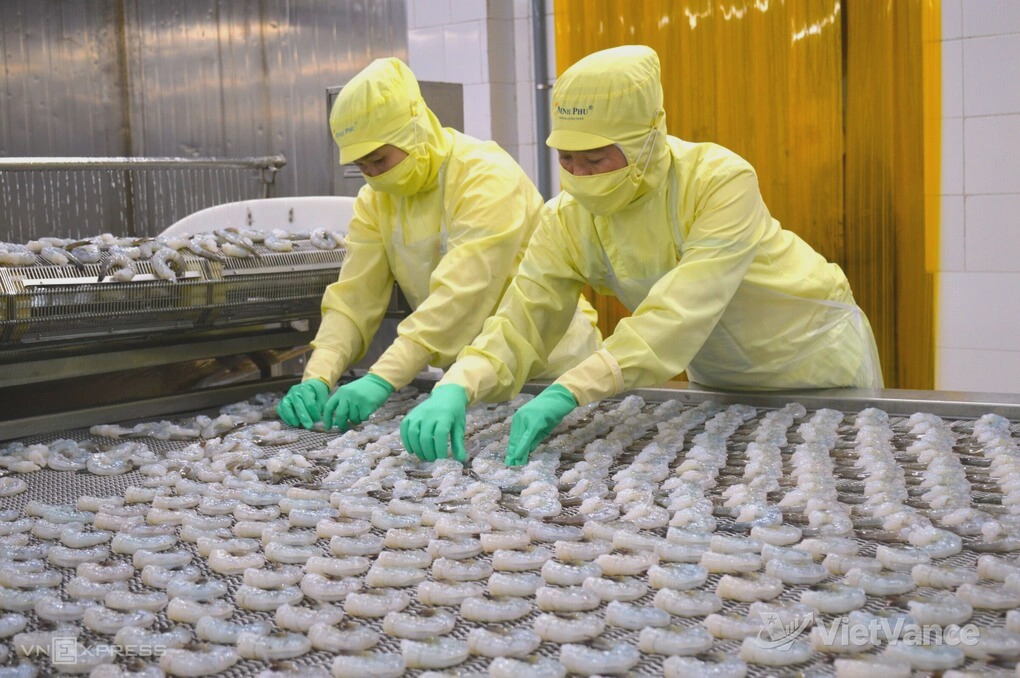
Shrimp being processed at a factory in Ca Mau Province.(VietVance)
The industry still faces fragmented farming, inadequate infrastructure in farming areas, and inconsistent management of shrimp seed quality and traceability. By the end of 2025, only about 24.5% of shrimp farming facilities required to register had received registration codes. VASEP expects abundant supplies from Ecuador and India to intensify price competition in 2027; production costs, product traceability and sustainability will also affect the competitiveness of Vietnamese shrimp.
Source: VietVance