Vietnam issues year-end consumer spending directive, calls for appropriate tax and fee policies
On November 21, Vietnam’s government issued Directive No. 40 on measures to boost consumption in late 2026 and during the 2027 Lunar New Year holiday. The prime minister called for tax and fee policies that ease household living costs, along with stable supplies of essential goods, price oversight and more consumer credit options.

On November 21, Vietnam’s government issued Prime Ministerial Directive No. 40, setting out measures to boost consumption and develop the domestic market in the final months of 2026 and during the 2027 Lunar New Year holiday. The prime minister called on ministries and local authorities to promptly address difficulties facing production and business. The Ministry of Finance should manage tax and fee policies appropriately to reduce household living costs and increase consumers’ spending capacity.
The directive said that prices of imported raw materials and fuels, credit pressures, and rising production and business costs could keep the domestic goods market under inflationary pressure from late 2026 into early 2027, weakening purchasing power. In the first 10 months of 2026, the consumer price index rose by an average of 4.57% year on year. Prices for housing, electricity, water and construction materials rose 6.7%, while fuel prices climbed 13%, pushing transport prices up nearly 7%.
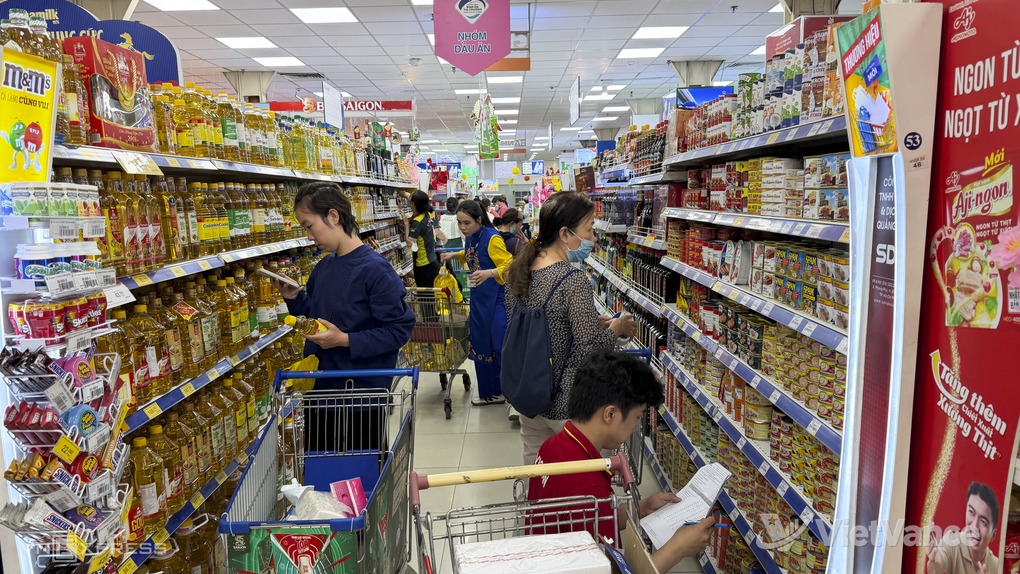
Shoppers at a supermarket in Ho Chi Minh City.(VietVance)
To stabilize the year-end market, the government called for a review of factors driving up prices, particularly for essential goods. Prices of government-regulated goods and services should be adjusted on an appropriate schedule, with year-end increases limited where possible. The government also called for a balance between supply and demand for essential goods at year-end and during Lunar New Year, strict action against hoarding and unjustified price increases that exploit market fluctuations, and a wider range of consumer credit products from lending institutions.
The Ministry of Industry and Trade must monitor international oil prices, ensure stable supplies of petroleum products and electricity for production and consumption, and accelerate work on policies for new business models such as outlet stores and commodity derivatives markets to expand sales channels. The government has previously reduced value-added tax by 2% and extended deadlines for tax and land rent payments, among other measures. Tax exemptions and reductions are expected to lower government revenue by about VND 256.7 trillion in 2026.
Source: VietVance