Vietnam’s National Assembly Passes Revised Real Estate Business Law
Vietnam’s National Assembly passed the revised Real Estate Business Law on November 21, setting rules for developers’ information disclosure, capital requirements and sales of future homes. It also caps deposits and payments before handover. The law takes effect on July 1, 2027.

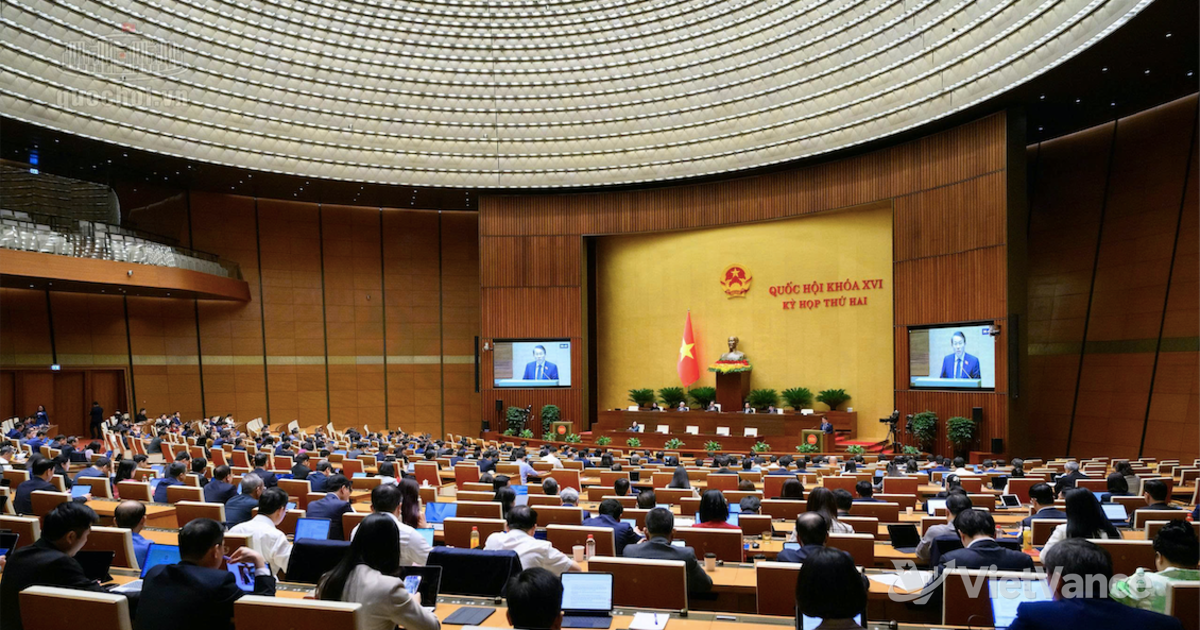
Vietnam’s National Assembly on November 21: 479 votes among 471 representatives who participated in the vote?
Vietnam’s National Assembly passed a revised Real Estate Business Law on November 21, with 471 of the 479 representatives who participated in the vote in favor. The revised law has 10 chapters and 63 articles, 20 fewer articles than the 2023 Real Estate Business Law, and will take effect on July 1, 2027.

Vietnam’s National Assembly passed the revised Real Estate Business Law by electronic vote.(VietVance)
Before putting a project on the market, developers must fully and accurately disclose legal documents relating to investment, land, planning and construction on the Housing and Real Estate Market Information System and their company websites. They must also disclose any mortgages, disputes or restrictions on property rights, publish the contracts used with customers, and update information when it changes. The revised law also prohibits trading in properties that do not meet legal requirements, forging documents, deliberately distorting information and collecting payments from homebuyers in violation of regulations.
For companies conducting real estate business through projects, equity must be at least 20% of total investment for projects using less than 20 hectares of land and at least 15% for projects using 20 hectares or more. Companies developing multiple projects at the same time must allocate enough equity to meet the applicable ratio for each project.
Sales of homes under construction require construction to have begun and the necessary land use rights and construction documents to be in place. Apartment buildings and mixed use buildings containing homes must also have documents confirming completion and acceptance of foundation construction. Before signing a sale or lease purchase contract, developers must notify the relevant provincial authority in writing so it can check whether the property meets the conditions for sale. Once a property qualifies to be put on the market, a developer may collect a deposit of no more than 5% of the sale or lease purchase price. The first payment, including the deposit, may not exceed 30% of the contract value.
Subsequent payments must match construction progress, and total payments collected before handover may not exceed 70% of the contract value. The cap is 50% when the seller is a foreign invested economic organization covered by the regulations. Unless the buyer or lease purchaser voluntarily handles the procedure, the developer must submit the application documents for a property ownership certificate within 50 days of handing over the home or the lease purchaser paying the agreed amount in full. The revised law also sets out real estate trading platforms’ responsibilities for checking documents and requirements for managing real estate data and electronic identification codes.
Source: VietVance