Vietnam passes revised Real Estate Business Law, effective July 2027
Vietnam’s National Assembly passed the revised Real Estate Business Law on November 21. Effective July 1, 2027, it requires developers to disclose project information and sets minimum equity ratios, deposit limits and payment caps for properties under construction.

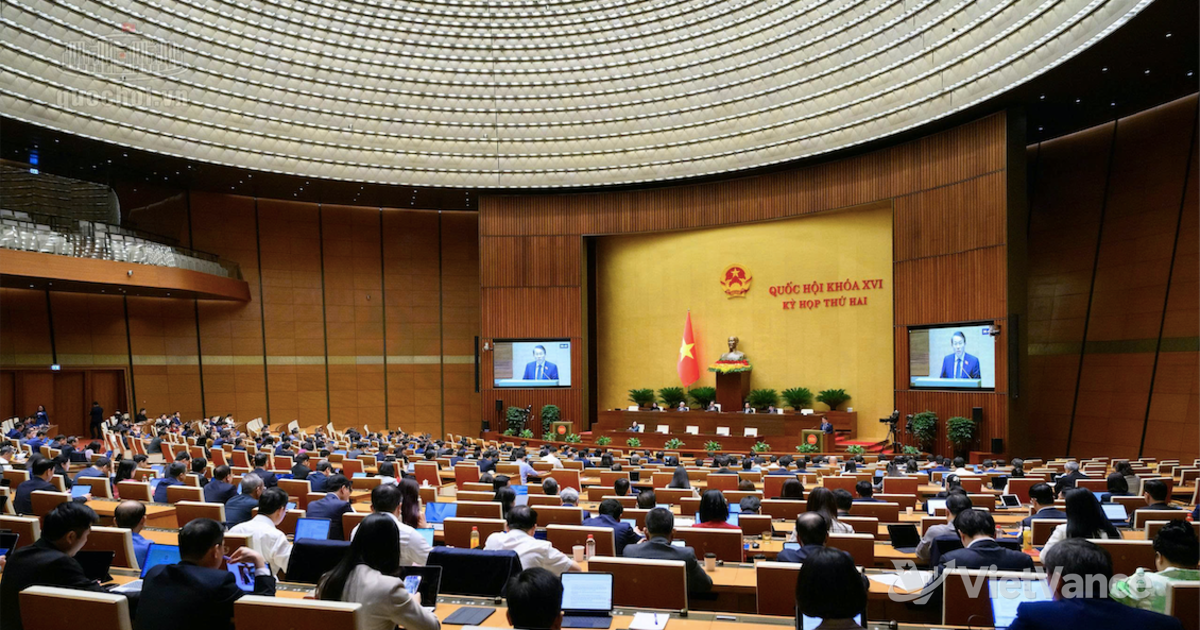
Vietnam’s National Assembly passed the revised Real Estate Business Law on the morning of November 21, 2026, with 471 participating deputies voting in favor. The new law has 10 chapters and 63 articles, 20 fewer articles than the 2023 Real Estate Business Law, and will take effect on July 1, 2027.

Vietnam’s National Assembly votes to pass the revised Real Estate Business Law.(VietVance)
Construction Minister Trần Hồng Minh told the National Assembly that the revisions aim to improve market transparency and strengthen the responsibilities of developers and real estate businesses. The new law requires developers to accurately disclose information on project investment, land, planning, construction, ownership restrictions, disputes and mortgages through the housing and real estate market information system and their company websites, and to update it when it changes. Forging documents, withholding information required to be disclosed and collecting payments from homebuyers in violation of regulations are prohibited.
For businesses operating real estate projects, equity must account for at least 20% of total investment in projects using less than 20 hectares of land, and at least 15% in projects using 20 hectares or more. Businesses carrying out multiple projects at once must meet the applicable ratio for each project. Before unfinished homes and buildings can be offered for sale, they must have the required land and construction documents; apartment buildings and mixed-use buildings containing homes must also have proof that their foundations have passed inspection.
For unfinished properties eligible for sale, developers may collect a deposit of no more than 5% of the sale or lease-purchase price. The first payment for an unfinished property, including the deposit, may not exceed 30% of the contract value, and subsequent payments must match construction progress. Total payments collected before handover may not exceed 70%, or 50% when the seller is a foreign-invested economic organization covered by the relevant provisions. Developers may not collect money in any form to secure a contract before the property or project meets the conditions for doing business.

Vietnamese National Assembly deputies vote on laws and resolutions.(VietVance)
The new law also requires developers to submit applications for ownership certificates within 50 days of handing over a home or of a lease-purchaser paying the full agreed amount, unless the buyer voluntarily handles the procedure. Operators of real estate trading platforms and brokerage services must establish businesses as required by law; trading platforms must check properties’ legal documents and eligibility for sale. The law also provides for unified management of housing and real estate business data and regulates electronic identification codes for real estate and other covered entities.
Source: VietVance