Vietnam Sets 2027 Economic Growth Target at 10% or Higher
Vietnam’s National Assembly has set a target of at least 10% economic growth in 2027 while maintaining macroeconomic stability and controlling inflation. A representative of its Economic and Financial Committee said the target reflects both Vietnam’s growth in 2026 and challenges involving private investment, export dependence and inflation.

Vietnam’s 16th National Assembly adopted a resolution on the 2027 socioeconomic development plan at its second session on November 7, 2026, setting a target of at least 10% economic growth. At a press conference after the session closed on November 21, Phạm Thị Hồng Yến, a full-time National Assembly deputy on the Economic and Financial Committee, said the target was intended to drive a breakthrough in the second year of the 2026–2030 five-year plan. She said the ultimate measures of its success would be actual growth outcomes, productivity and people’s living standards.
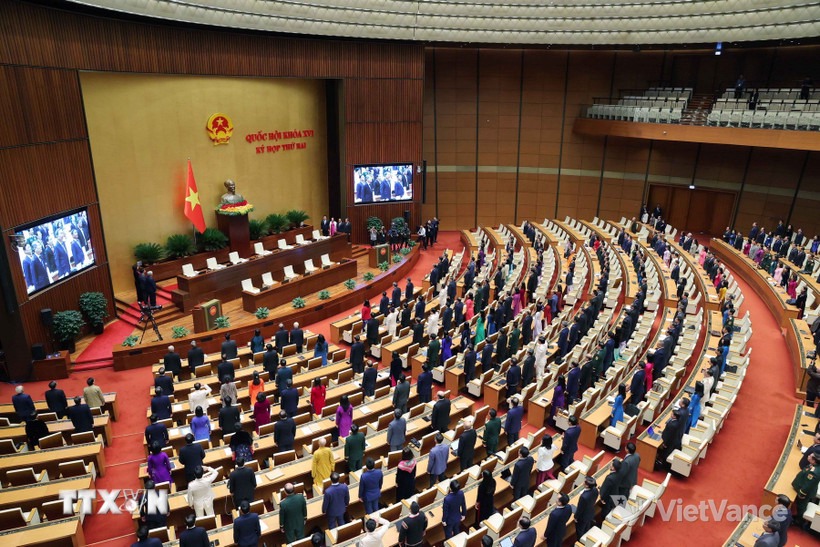
Delegates take part in a flag-raising ceremony at the closing of the second session of Vietnam’s 16th National Assembly.(VietVance)
She said the National Assembly had assessed Vietnam’s economic performance in 2026, its room for development and the challenges it faced when setting the target. In the first three quarters of 2026, Vietnam’s gross domestic product grew 9.01% year on year. Foreign direct investment disbursements in the same period reached US$21.1 billion, up 12.1% year on year. Total merchandise imports and exports exceeded US$1 trillion for the first time in the first 10 months of 2026.
Phạm Thị Hồng Yến also said private investment had yet to make a corresponding breakthrough, while production and exports remained heavily dependent on foreign direct investment and imported raw materials. The economy’s productivity, self-reliance and capacity to absorb capital remained limited, and pressures on inflation, exchange rates, interest rates and macroeconomic balances were expected to keep rising. The resolution adopted by the National Assembly therefore links the growth target to maintaining macroeconomic stability, controlling inflation and safeguarding the financial system.
At the same session, the National Assembly also passed amendments to the Land Law, the Real Estate Business Law and the Housing Law. Phạm Thị Hồng Yến said the review focused on the scope of each law, the rights and obligations of the parties involved, and the conditions and procedures for implementing projects and conducting real estate transactions. It also examined how the laws’ effective dates and transitional provisions would align to avoid gaps in their application.
Source: VietVance